Introduction
In 2025, commercial vehicle permits in Delhi are no longer just paperwork. They sit at the
intersection of pollution control, road safety and the city’s aggressive EV transition. If you
drive or operate an auto-rickshaw, taxi, goods vehicle or school bus in Delhi, permit compliance can decide
whether your vehicle is allowed to enter the city, carry passengers or even remain in your fleet.
This guide is deliberately Delhi-only and 2025-focused. You can use it:
- To understand which fuel types are allowed and where.
- To see how GRAP (Graded Response Action Plan) and CAQM orders override normal permits.
- To plan your shift to CNG / EV / BS-VI for stable long-term operations.
- To prepare internal compliance manuals or client advisories with real news references.
1. What changed for commercial vehicles in Delhi by 2025?
Between 2023 and 2025, Delhi’s commercial permit environment tightened significantly. Key shifts include:
-
Stricter fuel norms & GRAP-linked bans – Entry of polluting commercial goods vehicles from
outside Delhi is being banned from 1 November 2025, except BS-VI, CNG, LNG or EVs, as per a Delhi
Transport Department notice reported by
NDTV
.
-
CNG auto-rickshaws are being phased out under the draft EV Policy 2.0 – no new CNG auto registrations
and no renewal of CNG auto permits after the notified cut-off; older CNG autos above 10 years must shift
to electric, as highlighted by
NDTV
.
-
The cap of 1,00,000 auto-rickshaw (TSR) permits continues and was upheld by the Supreme Court in 2024, a
development covered by
Hindustan Times
.
-
CNG / electric taxis became eligible for 15-year permit validity under contract carriage permits, instead
of the earlier effective eight-year window, as reported by
Hindustan Times
.
-
School buses and school autos are under tighter safety checks, with the Directorate of Education (DoE)
ordering audits of vehicles ferrying school children, as noted by
The Times of India
.
-
Bus driver safety & training is being upgraded with simulator-based training and additional measures for
government buses, described in
India Today
.
These policy changes directly affect how you apply for, renew and use commercial permits in Delhi in 2025.
Vehicle fuel type, age, emission standard and safety configuration now matter as much as the permit paper itself.
2. Types of commercial vehicle permits in Delhi (2025)
Commercial permits in Delhi are granted by the Transport Department, GNCTD and the State Transport Authority (STA)
under the Motor Vehicles Act, 1988, Central Motor Vehicle Rules and Delhi Motor Vehicle Rules.
Broadly, in 2025 you are looking at:
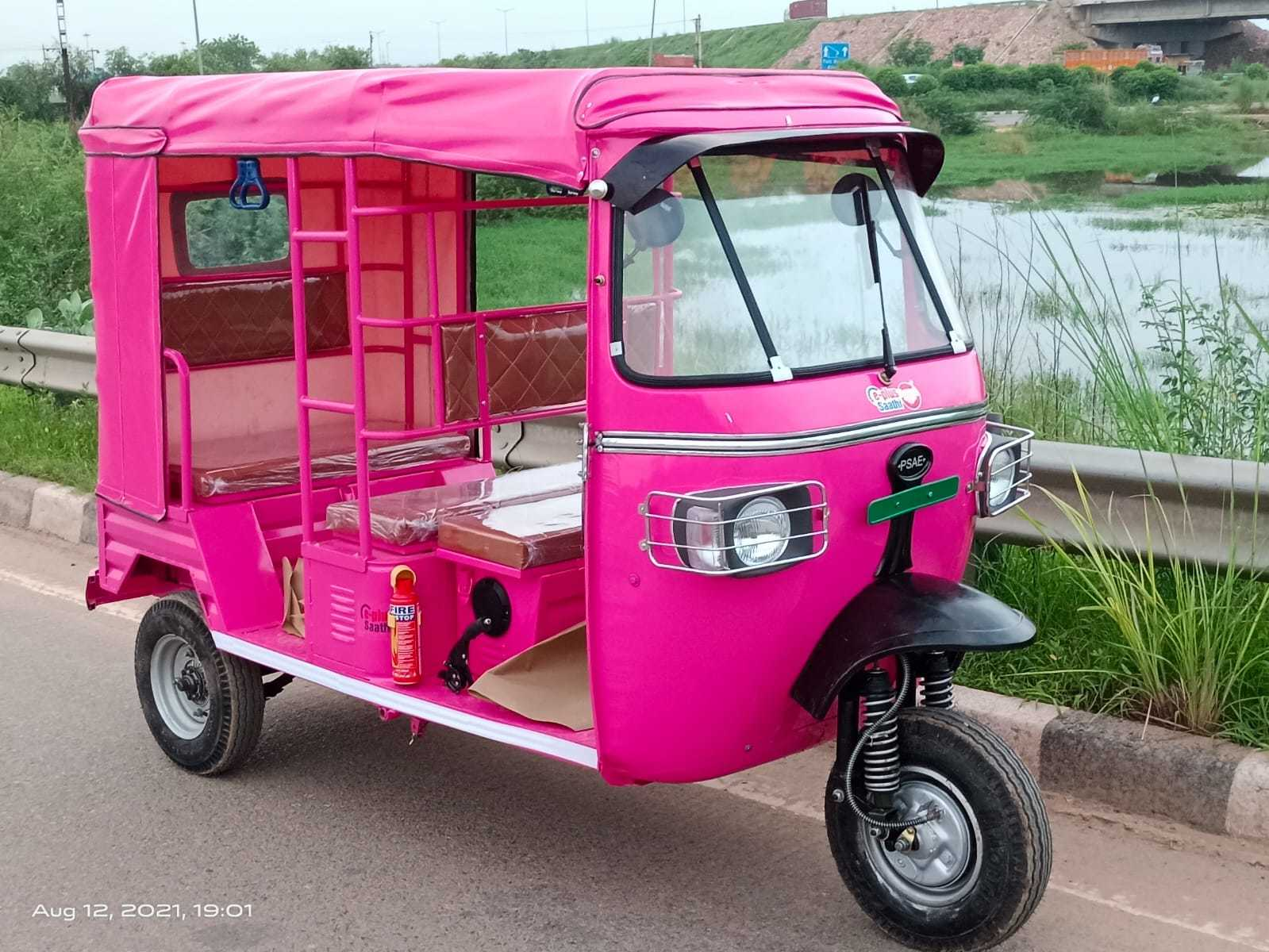
Auto-rickshaw (TSR) permits
- Three-seater TSRs (autos) carrying passengers on meter or as per approved fare structure.
- Legacy CNG autos with existing permits.
- New electric auto (e-auto) permits under Delhi’s EV transition roadmap.
Taxi / cab permits
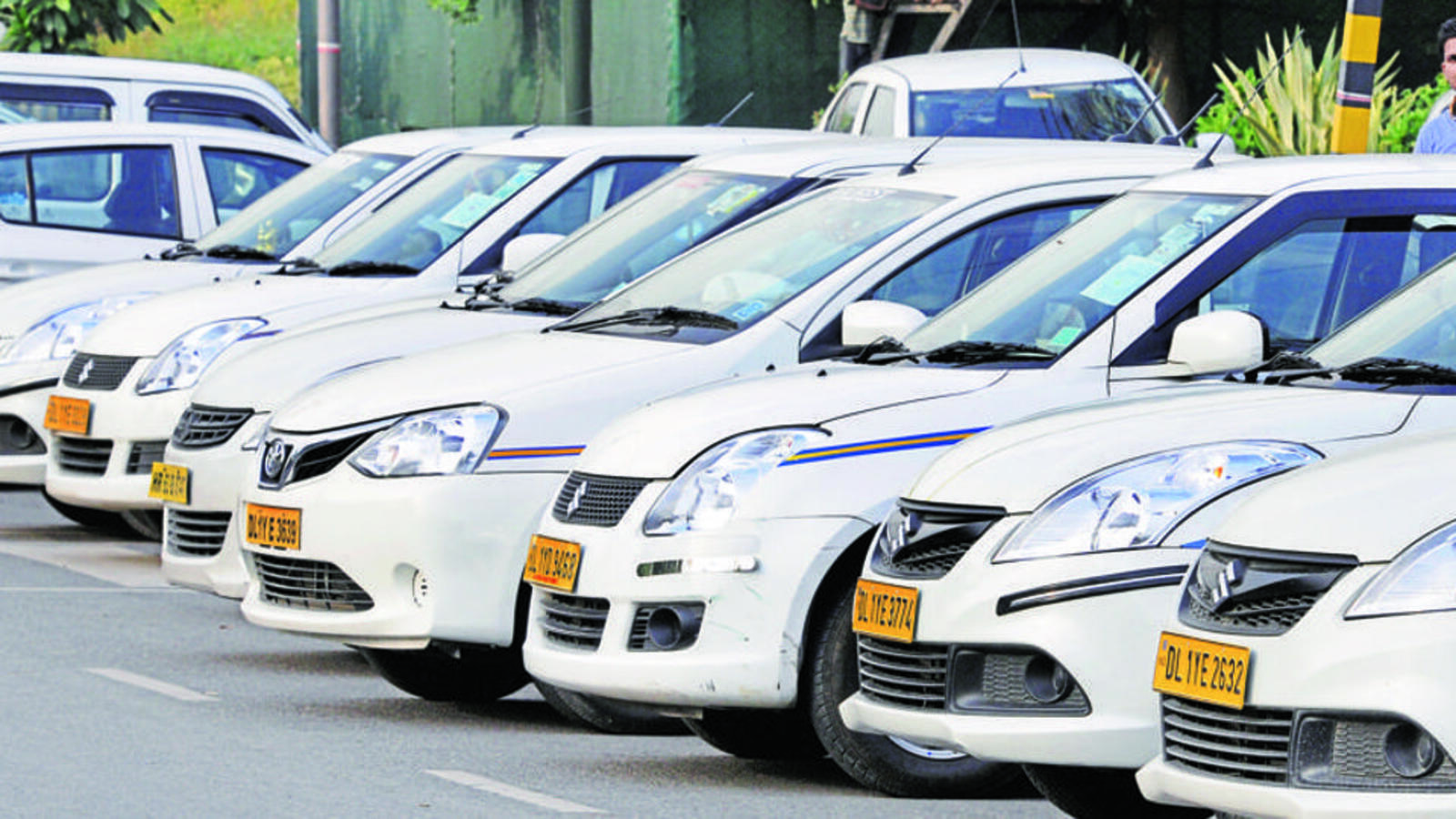
- City Taxi Scheme vehicles (for example DL1RT series with yellow plates).
- Contract carriage permits for taxis and cabs, including those attached with aggregators.
- Strong policy preference for CNG, hybrid and electric taxis over diesel variants.
Goods vehicle permits
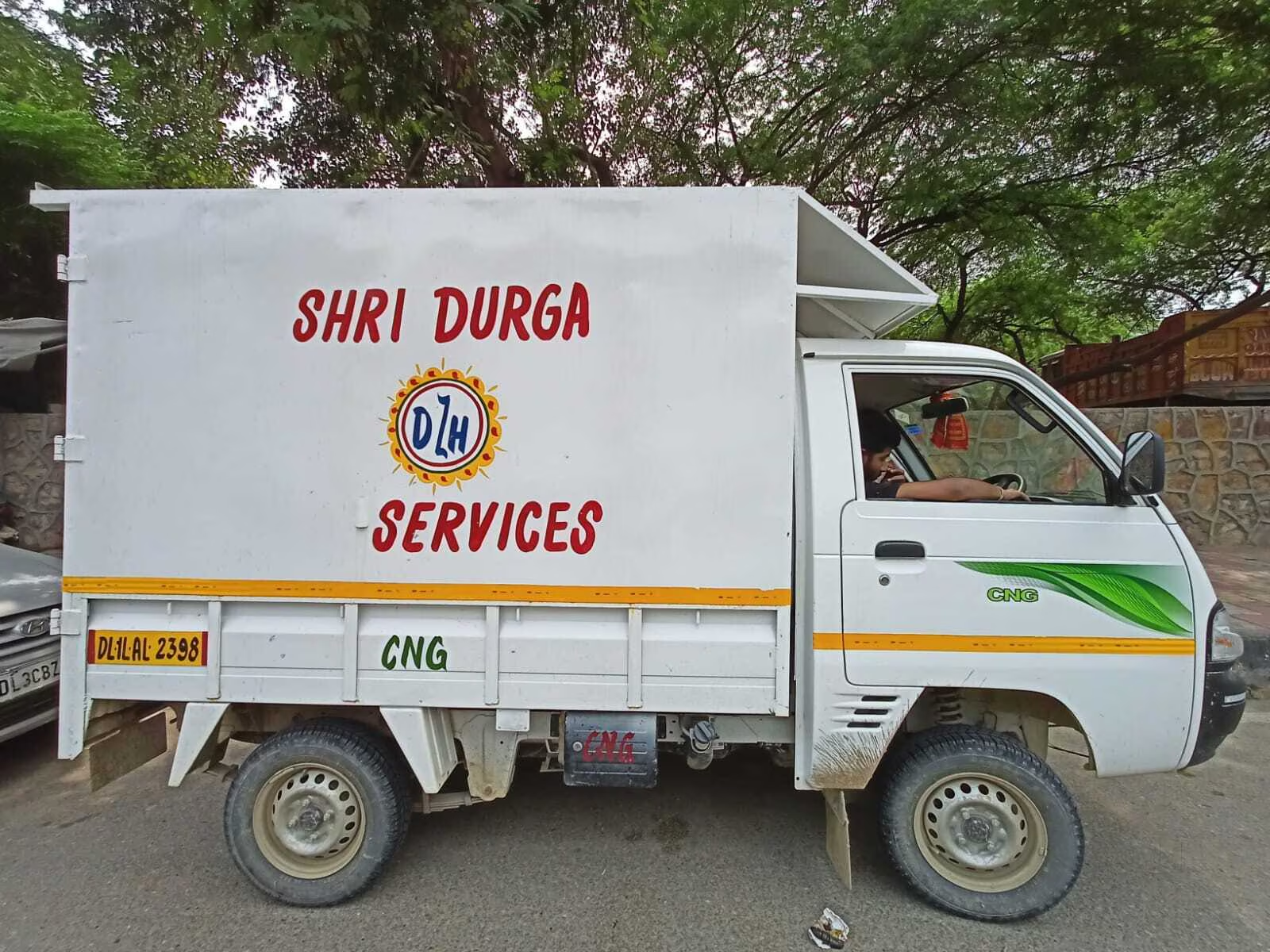
- Light goods vehicles (LCVs), medium and heavy goods vehicles.
- Local / Delhi permits, National permits and special entry rules for Delhi & Delhi-NCR borders.
- Additional restrictions based on BS standard, fuel type and GRAP stage.
School bus / school cab permits
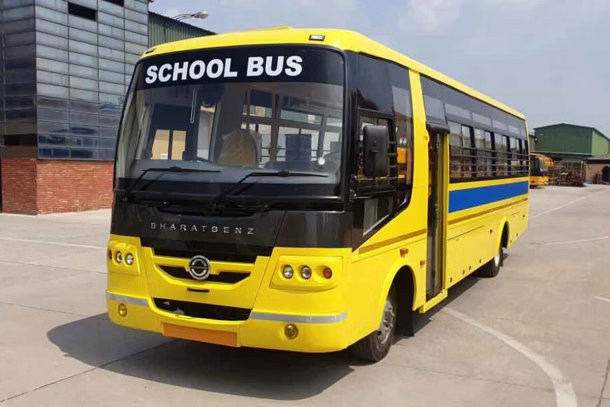
- Dedicated school buses (yellow with “SCHOOL BUS” marking).
- School cabs / vans / autos operating under strict child safety norms.
- Mandatory fittings like speed governors, GPS, CCTV, panic buttons, first aid kits and more.
Across categories, almost every permit now carries a fuel-type filter (CNG/EV/BS-VI) and additional
conditions linked to air quality and road safety.
3. Auto-rickshaw permits in Delhi 2025 (CNG vs e-auto)
Policy background – cap & EV transition
Delhi’s three-wheeler ecosystem is governed by two big ideas:
- A cap of 1,00,000 TSR (auto-rickshaw) permits, which the Supreme Court has chosen to retain on
environmental grounds.
- A shift from CNG to electric autos under the draft EV Policy 2.0, which proposes:
- No new CNG auto registrations from a notified date (for example 15 August in policy discussions).
- No renewal of CNG auto permits after the cut-off – fresh permits are essentially e-auto only.
- Older CNG autos above around 10 years being pushed toward electric replacement.
Who can get an auto / e-auto permit in Delhi?
Typical Delhi-specific eligibility (always check latest notifications) includes:
- Residence: usually a Delhi resident with address proof (Voter ID, Aadhaar with Delhi address, etc.).
- Driving Licence: valid Transport DL with three-wheeler / LMV (Transport) endorsement and minimum
1 year experience.
- PSV Badge issued by Delhi Transport Authority.
- No major record of drunk driving, repeated rash driving or serious fatal accidents.
- Vehicle must be:
- Electric (for new permits) or existing CNG where permitted.
- Painted in prescribed green-yellow colour with yellow plate.
- Fitted with GPS, fare meter and panic button as per norms.
Application & renewal – ground reality
Fresh auto / e-auto permits are usually issued:
- Only when allowed within the 1,00,000 cap and EV policy roadmap.
- Often via lottery schemes for e-auto permits through the official Transport Department portal.
A typical e-auto permit process looks like:
- Register on Delhi Transport citizen services.
- Fill e-auto permit / lottery application form.
- Upload documents: DL, Aadhaar, address proof, caste/beneficiary certificates (where applicable).
- If selected, purchase an approved e-auto, register it as a commercial vehicle and obtain the permit.
As EV replacement approaches, many auto owners consider selling or transferring ownership of older vehicles.
In such cases, a clean RC transfer becomes crucial. Fateh Legacy helps with this via:
Ownership Transfer in DL05 (Loni Road, Delhi) – RC change for commercial autos & small vehicles
4. Taxi permits in Delhi 2025 (CNG, electric & aggregator taxis)
15-year taxi permits for CNG & electric taxis
From 2023 onwards, Delhi decided to extend contract carriage permits for taxis running on CNG or electric fuel
to 15 years. Earlier, taxi operators effectively planned within an 8-year horizon due to renewals and age limits;
now, cleaner-fuel taxis get a longer, more stable permit window, subject to:
- Overall vehicle age limits for commercial vehicles.
- Annual fitness (FC) renewals, valid insurance and tax.
- Compliance with aggregator / City Taxi Scheme conditions where applicable.
Main taxi permit categories
- City Taxi / Contract Carriage Permits – yellow plate taxis operating within Delhi.
- All India Tourist Permit (AITP) taxis – separate inter-state norms and fee structure.
- Aggregator cabs – Ola, Uber and others, which must comply with Delhi aggregator guidelines, EV
share targets, GPS/panic button norms and driver background checks.
- Fleet taxis – corporate, hotel and institutional fleets under contract carriage arrangements.
Key taxi permit conditions
- Fuel norm: Strong preference for CNG, hybrid or electric; new diesel city-taxi permits are heavily
restricted or discouraged.
- Vehicle age: Must comply with commercial age limits and ELV rules; older diesels face tighter scrutiny.
- Mandatory fitments:
- GPS and panic button.
- Fare meter (for relevant categories).
- Reflective tapes, first aid kits, fire extinguisher.
- Driver requirements:
- Valid Transport DL with appropriate category.
- Badge (PSV badge) and police verification.
- Training & behavioural norms for aggregator platforms.
If you or your drivers need to obtain or upgrade a driving licence for taxi operations, it is safer to complete
DL work first before investing in a new vehicle. Fateh Legacy assists with this through:
Driving License in DL02 (Tilak Marg, Delhi) – Transport DL, renewals & endorsements for taxi drivers
4.4 How to apply / renew a taxi permit in Delhi
A typical taxi permit workflow:
- Register/purchase the vehicle and get it registered as a commercial taxi (for example, DL1RT series).
- Ensure fitness certificate, insurance and PUC are valid.
- Apply online on the Delhi Transport / Vahan portal for the appropriate permit category.
- Upload RC, insurance, fitness, PUC, driver DL & badge and address proofs.
- Pay permit fee + road tax (and green tax, where applicable).
- Download and carry the e-permit or smart card permit in the vehicle.
Over the life of a taxi, you may also need to shift permits between owners or vehicles, or move the vehicle
out of Delhi through NOC. These transitions require careful documentation so that permits do not lapse mid-season.
5. Goods vehicle permits & entry rules in Delhi 2025
Goods vehicle types & permits
Delhi sees a mix of:
- Light Commercial Vehicles (LCVs) – delivery vans, pick-ups and small trucks serving city logistics.
- Medium & Heavy Goods Vehicles – trucks entering from borders like Tikri, Ghazipur, Rajokri, etc.
Permit categories include:
- Local / Delhi goods carriage permits – for vehicles registered in Delhi and operating primarily within city limits.
- National permits – inter-state movement, subject to Delhi entry rules, tolls and pollution-related orders.
Non-BS-VI outside-Delhi trucks banned from 1 November 2025
According to a Delhi Transport Department notice reported by
NDTV
:
- From 1 November 2025, all commercial goods vehicles registered outside Delhi that are not BS-VI
compliant will be prohibited from entering Delhi.
- BS-IV commercial goods vehicles from outside Delhi get a temporary relaxation only till
31 October 2026.
- There is no restriction on:
- Commercial goods vehicles registered in Delhi,
- BS-VI diesel goods vehicles,
- Vehicles running on CNG, LNG or electricity.
GRAP & seasonal restrictions on trucks
During GRAP Stage III–IV (Severe and Severe+ AQI) in winter:
- Truck entry is often suspended or tightly restricted, except for essential goods, CNG/LNG/EV and
BS-VI compliant vehicles, as per CAQM / GRAP orders.
- Even if a truck has a valid permit, it may be barred from entering on certain days.
- Operators must monitor night entry windows, border queues and GRAP notifications before dispatch.
Applying for a goods vehicle permit in Delhi
For a typical Delhi-registered goods vehicle:
- Register the vehicle as N-category commercial (yellow plates).
- Apply online for a goods carriage permit on the Delhi Transport portal.
- Upload RC, fitness certificate, insurance, PUC, and owner address/ID proof.
- Pay permit fees, road tax and green tax (if applicable).
- Carry the permit copy (physical or digital) in the vehicle.
If you decide to move a Delhi-registered truck out of the city permanently to escape ELV or GRAP pressures,
you will usually need a clean NOC. Fateh Legacy supports this through:
NOC in DL10 (Raja Garden, Delhi) – Move your goods vehicle registration out of Delhi
Where trucks are still under finance, it is also important to clear hypothecation before scrapping or
moving out. For that, Fateh Legacy offers:
Hypothecation Removal in DL12 (Vasant Vihar, Delhi) – Close bank loan entries on your RC
6. School bus & school cab permits in Delhi 2025
Safety-first approach
School transport in Delhi is treated as a high-risk category. After multiple incidents in the past, the
Directorate of Education (DoE) ordered safety audits of buses, autos and vans used to ferry school
children – a move covered by
The Times of India
.
Parallelly, the Transport Department is tightening driver training and safety measures for buses, including
simulator-based training for government bus drivers, as highlighted by
India Today
.
Permit & vehicle requirements for school vehicles
For school buses and school cabs / vans in Delhi, you typically need:
- A suitable contract carriage permit specifically endorsed for school use.
- Vehicle colour & markings:
- Yellow body with “SCHOOL BUS” written at the front and rear.
- For cabs/vans: “ON SCHOOL DUTY”.
- Mandatory fitments:
- Speed governor with fixed maximum speed.
- First aid box and fire extinguisher.
- GPS, CCTV and panic button (increasingly enforced).
- Child-safe seating, window grills and reliable door locks.
- Driver & attendant requirements:
- Valid Transport DL with appropriate category and experience.
- Police verification and medical fitness.
- Attendant/helper to manage boarding and de-boarding; a lady attendant for certain age groups.
- Operational norms:
- No overloading – children count must not exceed certified seating capacity.
- Safe, designated parking locations near schools or authorised parking.
Applying for / renewing a school bus permit
The usual flow:
- Get the bus body-built as per school bus specifications.
- Register the vehicle as a school bus (transport) at the Delhi RTO.
- Apply for the relevant contract carriage permit for school use.
- Submit:
- NOC / agreement from the school (if a private contractor).
- Driver + attendant documents.
- Fitness, insurance, pollution and tax receipts.
- Keep permit copy plus DoE / CBSE safety compliance documents handy for inspections.
Where school-vehicle RCs have been lost or damaged over time, it is important to first obtain a Duplicate RC
so that permits and fitness are processed smoothly. Fateh Legacy supports this via:
Duplicate RC in DL07 (Mayur Vihar, Delhi) – For lost or damaged RC used in school vehicle operations
7. Practical compliance tips for Delhi commercial vehicle owners (2025)
Use this checklist if you operate autos, taxis, goods vehicles or school transport in Delhi:
- Fuel & emission first – Treat CNG, EV and BS-VI diesel as the only long-term options for most
commercial categories within Delhi.
- Track EV Policy 2.0 timelines for autos and three-wheeler goods carriers; do not buy a fresh CNG vehicle
in a category slated for early phase-out.
- Before dispatching a goods vehicle from outside Delhi, check:
- The vehicle's BS standard and fuel type.
- Latest CAQM / GRAP orders and any seasonal restrictions.
- For taxis, align purchases around:
- The 15-year permit benefit for CNG / electric taxis.
- Access to aggregator platforms that increasingly prioritise EVs.
- For school vehicles, treat safety rules as non-negotiable; audits and media attention can shut down
operations quickly if violations are found.
- Maintain a calendar for permit, FC, insurance, tax and PUC expiry and renew well in advance.
- When approaching age or fuel-type cut-offs, plan for:
- Replacement with an EV or cleaner equivalent, or
- NOC + movement out of Delhi to a less restrictive state.
Sometimes, your compliance plan will involve a combination of ownership transfer, NOC and RC clean-up. For complex
multi-step cases, professional RTO support helps avoid repeated visits and rejections.
If you are restructuring a small fleet (mixed autos, taxis and LCVs) from East/North Delhi, you may need a sequence like
ownership transfer → NOC → fresh registration elsewhere. Fateh Legacy can help plan such transitions end-to-end.
For on-ground, in-person RTO assistance across Delhi zones,
RTO Consultants in Delhi
who are familiar with commercial permit workflows, GRAP compliance requirements, and zonal RTO procedures can help
you move through each step without delays or document rejections.
Conclusion
By 2025, operating commercial vehicles in Delhi has become a policy-heavy, compliance-driven task. Permit
papers alone are not enough – your fuel type, BS standard, vehicle age, fitness status and safety configuration all
decide whether your vehicles can legally run, enter Delhi or carry children and passengers.
- Shift your fleet toward CNG, EV or BS-VI diesel as quickly as financially possible.
- Track GRAP and CAQM orders during winter, especially for goods vehicles.
- Keep permits, fitness, tax, insurance and PUC updated and easily accessible during checks.
- For school transport, treat safety norms and DoE audits as central to your business model, not a formality.
- For aging vehicles, plan early for replacement, NOC or scrapping instead of last-minute panic before a
ban date.
If the rules feel overwhelming or your documents are scattered across owners and states, Fateh Legacy can help
you simplify the path from policy PDFs to practical, on-road compliance so that your autos, taxis, trucks and
school buses remain legally and operationally fit in Delhi.
How Fateh Legacy helps with commercial permits & fleet documentation in Delhi
In real life, commercial permit work in Delhi is rarely one single application. Auto, taxi, truck and school
fleet owners face linked issues: ownership changes, NOC to other states, hypothecation on RC, duplicate documents
and driver licence upgrades. This is where Fateh Legacy can act as a structured RTO partner.
With Fateh Legacy, you get:
- Guided permit workflows – ensuring your vehicle fuel type, age, documents and fitness records meet the
latest norms before you approach STA / RTO.
- NOC and out-of-Delhi movement support for trucks, taxis and autos when ELV or GRAP-related bans make
local operation unviable.
- RC clean-up services – ownership transfer, Duplicate RC and hypothecation removal so that your RC data
is correct before permits, scrapping or re-registration elsewhere.
- Driving licence assistance for owners and drivers so that both vehicle and driver documents stay compliant
during checks.
Unsure how Delhi’s 2025 rules affect your autos, taxis, trucks or school buses?
Fateh Legacy helps commercial vehicle owners, schools, fleets and logistics operators across Delhi with permit
planning, NOC, hypothecation removal, Duplicate RC, ownership transfer and driving licence services, so you
stay compliant without wasting time in queues or missing policy cut-offs.
Talk to our Delhi Transport Expert
Frequently Asked Questions
Can I still get a new CNG auto-rickshaw permit in Delhi in 2025?
Practically, no. Under the draft EV Policy 2.0, Delhi is planning to stop fresh CNG auto registrations and non-EV permit renewals in stages. New permits are expected to be electric-auto only, while existing CNG auto owners are nudged to convert to electric or replace vehicles within the policy period.
What is the validity of a taxi permit in Delhi if my taxi is CNG or electric?
For taxis running on CNG or electric, contract carriage permits can now be issued with a validity of up to 15 years, subject to overall commercial vehicle age limits, annual fitness and compliance with Motor Vehicles rules and aggregator guidelines (where applicable).
Are diesel taxis allowed to get new city permits in Delhi in 2025?
New diesel taxi permits for regular city operations are heavily discouraged or not granted under the current environmental regime. Policy focus is firmly on CNG and electric taxis. Diesel may survive only in limited inter-state or tourist categories and is a high-risk option for long-term city operations.
Can an outside-Delhi goods vehicle with BS-IV engine enter Delhi with a valid permit?
From 1 November 2025, outside-Delhi commercial goods vehicles that are not BS-VI compliant are being banned from entering Delhi, with temporary relaxation for BS-IV vehicles only till 31 October 2026, as reported by NDTV. After these dates, entry will be extremely limited or prohibited regardless of normal permit validity.
My goods vehicle has a valid permit. Can GRAP still stop me from entering Delhi?
Yes. GRAP-based restrictions (winter pollution measures) can override your day-to-day permit. During severe pollution stages, even permitted vehicles can be stopped or restricted, except for essential goods and cleaner-fuel vehicles. Always check the latest CAQM / Delhi Transport orders before entering.
Is a fitness certificate mandatory every year for commercial vehicles in Delhi?
Yes. For all commercial vehicles (autos, taxis, goods vehicles, buses), a valid fitness certificate (FC) is mandatory. FC is linked to permit renewal, tax payment and enforcement checks. Running without FC can lead to challans, permit cancellation and in some cases, vehicle impounding.
What special rules apply to school buses and school cabs in Delhi?
School vehicles must have a school-use contract carriage permit, be painted yellow with “SCHOOL BUS” or “ON SCHOOL DUTY”, and be fitted with speed governors, first aid kits, fire extinguishers, GPS, CCTV/panic button and proper child-safe seating. Drivers need a Transport DL, police verification and training; DoE-ordered audits enforce these norms regularly.
Do Delhi auto-rickshaw permits still have a numerical cap?
Yes. As of 2024–25, the cap of 1,00,000 TSR auto-rickshaws in Delhi is still in force. The Supreme Court has refused to remove this limit on environmental grounds, so new permits are typically issued only within this cap and often prioritised for electric autos under EV policy.
Can I convert my existing CNG auto or taxi to electric and keep the same permit?
In many cases, yes – subject to Transport Department rules, EV policy guidelines and vehicle age. Typically, you need to surrender or modify the existing RC, get the electric vehicle registered in your name and then endorse the existing permit on the new EV or shift to an EV-specific permit, following official procedures.
Where can I check my permit status or apply online in Delhi?
Use the official Delhi Transport Department portal or the Parivahan (MoRTH) portal for services like permit application/renewal, fitness booking, tax/fee payment and downloading e-permits. Always cross-check the latest circulars, GRAP orders and EV notifications before making long-term vehicle investment decisions.