Introduction
Delhi experiences severe air-quality fluctuations during the pollution season, prompting the Commission for Air Quality Management (CAQM) to activate the Graded Response Action Plan (GRAP). For construction transporters, C&D waste haulers, raw-material suppliers, commercial fleet owners and diesel truck operators, these GRAP notifications directly influence day-to-day operations and compliance requirements.
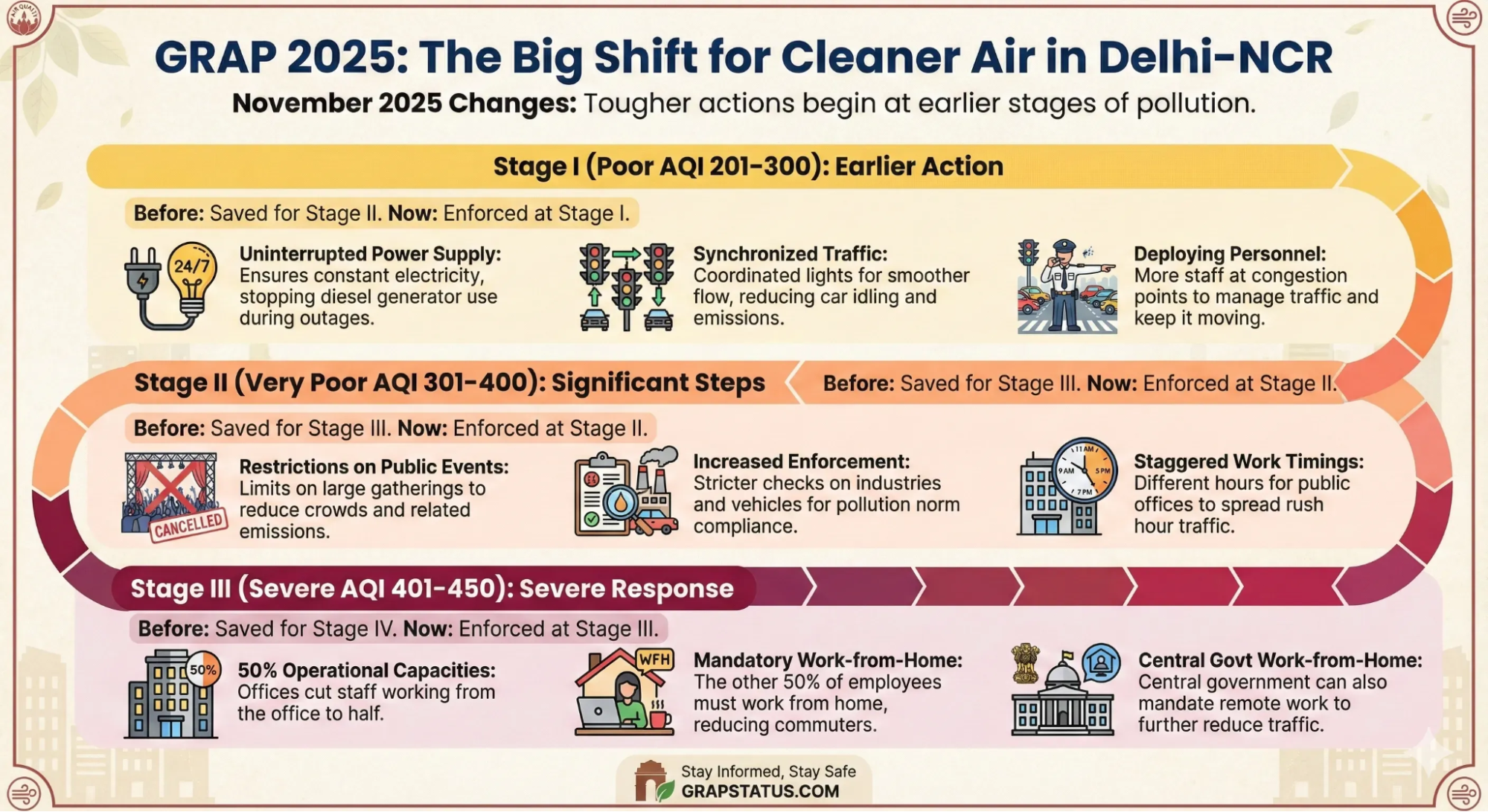
In 2025, construction transport is one of the biggest sectors impacted by GRAP rules. From overnight entry bans to engine-type restrictions on BS-III petrol and BS-IV diesel vehicles, the regulations now determine:
- how quickly construction material can move,
- when sites are permitted to receive deliveries, and
- which fleets are allowed to enter Delhi at different pollution stages.
Understanding these rules is essential to avoid penalties, reduce operational downtime, and optimize transport routes for smooth functioning during the high-pollution months. For reference, this guide also incorporates insights from major news updates such as:
Times of India: “Stage 3 of GRAP activated in Delhi; know what’s allowed and what’s prohibited” (2025)
.
1. What is GRAP & why it affects construction transport in Delhi?
GRAP (Graded Response Action Plan) is an emergency protocol activated in Delhi NCR when the
Air Quality Index (AQI) reaches Poor, Very Poor, Severe or Severe+ categories.
According to the official CAQM GRAP Framework,
construction activity and C&D waste transport contribute significantly to
dust, PM2.5 and PM10 levels.
The Delhi Pollution Control Committee (DPCC) has also issued mandatory
dust-control and transport guidelines for construction projects, especially for:
- Construction and demolition waste tippers and dumpers
- Transit mixers and ready-mix concrete carriers
- Heavy diesel carriers bringing sand, soil, bajri, bricks and aggregates
- Material vehicles moving in and out of large project sites
Recent pollution episodes highlighted in leading media reports (such as
The Hindu's Delhi air quality updates) show how quickly AQI can jump to Severe, triggering
instant GRAP restrictions on construction transport across Delhi's borders and hotspots.
2. GRAP Stage 1 (AQI 201–300 – Poor): Rules for construction transport
When AQI enters the Poor (201–300) category, Stage 1 of GRAP begins. This is the alert stage where
transporters must start basic dust and emission control.
- All construction material (sand, soil, bajri, aggregates) must be fully covered during transport.
- No overloading of dumpers, tippers or trucks is allowed.
- All vehicles must carry a valid PUCC (Pollution Under Control Certificate).
- Water sprinkling and basic dust suppression at loading/unloading points become mandatory.
At this stage, most construction transport is allowed, but enforcement teams begin checking:
PUCC validity, overloading, tarpaulin covers and dust leakage from vehicles — as also highlighted in recent GRAP Stage 1 coverage such as
NDTV’s report on Delhi-NCR activating Stage 1 of the anti-pollution plan
.
3. GRAP Stage 2 (AQI 301–400 – Very Poor): Tighter checks on C&D transport
When AQI crosses into the Very Poor (301–400) range, Stage 2 of GRAP is activated. Restrictions become
stronger and checks on C&D waste vehicles increase sharply.
- GPS tracking becomes mandatory for registered C&D waste trucks in many large projects.
- Anti-smog guns and water sprinklers must be used at high-dust sites and loading zones.
- Vehicles without proper tarpaulin covers or with visible dust leakage face immediate penal action.
- Inspection drives intensify in hotspots like
Anand Vihar, Karkardooma, Preet Vihar, Rohini, Burari, Jahangirpuri, Okhla and Mayur Vihar.
Reflected in formal updates like
CAQM’s notification on activating Stage II of GRAP in NCR
.
4. GRAP Stage 3 (AQI 401–450 – Severe): Major bans for construction trucks
Once AQI touches the Severe (401–450) range, Stage 3 of GRAP is enforced. This is where
major restrictions and bans on construction transport begin.
- Ban on C&D waste transport in Delhi, except for notified essential projects.
- No entry of diesel trucks carrying construction materials inside Delhi on most days.
- Border restrictions become strict at:
Ghazipur, Chilla, Tikri, Singhu, Rajokri and other key entry points.
- Enforcement teams check permits, exemption letters and vehicle documents for any truck claiming essential status.
News updates and pollution bulletins frequently show how
construction trucks are stopped at borders and turned back or parked outside city limits
during Stage 3, as highlighted in reports such as
Economic Times: Construction ban & vehicle restrictions under GRAP Stage III
.
5. GRAP Stage 4 (AQI 450+ – Severe+): Emergency restrictions for commercial vehicles
When AQI crosses 450+, Stage 4 (Severe+) is triggered. This is the emergency level where almost all
construction and associated transport work is stopped inside Delhi.
- Complete ban on construction and demolition activities, except for critical government projects.
- Complete ban on C&D waste transport vehicles inside Delhi.
- No entry of commercial diesel vehicles (except essential commodities) into Delhi.
- Even LMVs (Light Motor Vehicles) used for construction support may be stopped, unless exempted.
Only essential commodity vehicles such as those carrying food, medicines, fuel, emergency equipment
or government project materials are allowed, and usually only with proper documentation. A highlighted in reports such as
Business Standard’s coverage of Delhi’s AQI turning Severe+ and GRAP emergency rules
.
6. Penalties for violating GRAP transport rules in Delhi
Violating GRAP restrictions on construction transport in Delhi can lead to serious financial and legal
consequences. Common penalties include:
| Violation |
Approx. Penalty |
Authority |
| Uncovered C&D waste transport |
₹20,000 – ₹50,000 |
DPCC / MCD |
| Operating during Stage 3 or 4 ban |
High penalties + vehicle seizure |
Delhi Police / Transport Dept. |
| Non-compliant PUCC or visible smoke |
Challan under Motor Vehicles Act |
Delhi Traffic Police |
| Repeated violations by same fleet |
Blacklisting & work stoppage |
MCD / Project Authorities |
Enforcement is most active in busy transport zones such as
DL01 Mall Road, DL03 Sarai Kale Khan, DL06 Janakpuri, DL09 Dwarka, DL11 Rohini and DL12 Vasant Vihar,
as well as near large construction corridors and landfill routes.
7. Exemptions under GRAP for construction & infrastructure projects
GRAP is strict, but certain critical sectors can receive exemptions, especially in Stage 3 and 4.
Typical exemptions include:
- Metro rail projects, flyover and major road infrastructure
- Hospitals, healthcare infrastructure and emergency buildings
- Government utility works related to water, electricity, sewage and public safety
- CNG or electric C&D transport vehicles (rare but increasingly encouraged)
However, most diesel commercial vehicles do not get relaxation in Stage 3 and 4, unless they clearly fall
under essential category and carry proper authorisations.
8. Compliance checklist for Delhi construction transporters
To avoid last-minute confusion and challans during pollution season, every construction transporter,
C and D waste contractor and fleet owner in Delhi should follow this checklist:
- Keep PUCC updated for all vehicles in your fleet.
- Install GPS tracking and maintain route logs for C&D trucks.
- Use proper tarpaulin covers on all loads of soil, sand, debris and aggregates.
- Maintain anti-smog guns, sprinklers and wheel-washing systems at major sites.
- Gradually shift to CNG/Electric vehicles for urban construction runs where possible.
- Plan deliveries outside peak GRAP hours and avoid sensitive hotspots.
- Keep copies of exemption letters and project approvals ready for inspections.
Many fleet operators and C&D contractors in Delhi also work with
Delhi RTO agents to ensure their vehicle RC records, permits and
fitness certificates are all current before pollution season begins —
since an expired document at a border checkpoint during Stage 3 or Stage 4 can ground
an entire fleet without warning.
Staying compliant not only keeps your vehicle safe on Delhi roads but also protects you from
sudden restrictions whenever AQI worsens and GRAP is upgraded overnight.
How Fateh Legacy helps commercial vehicle owners during GRAP
For many transporters and fleet owners, the biggest challenge is not just knowing the rules, but
keeping documents, permits and RTO records updated so that vehicles are not stopped for paperwork issues.
That's where Fateh Legacy supports Delhi businesses.
- Assistance with RC corrections, ownership transfer and NOC for commercial vehicles.
- Help in resolving pending challans that can block your vehicles during GRAP checks.
- Guidance on PUCC, fitness certificate, permit and tax compliance.
- Clear document checklists tailored for C&D transporters and fleet operators.
Need help keeping your construction vehicles compliant in Delhi?
Fateh Legacy works with Delhi-based transporters, C&D waste contractors and fleet owners to streamline
RTO paperwork, challan issues and compliance checks so your business can run smoothly even during GRAP season.
Talk to our Delhi RTO Expert
Conclusion
Delhi's GRAP rules for construction transport are stringent and affect thousands of businesses every winter.
From small C&D waste contractors to large infrastructure companies, everyone must follow
stage-wise restrictions and keep vehicles fully compliant.
- Understand what each GRAP stage (1 to 4) means for your fleet.
- Keep your PUCC, permits and RTO records fully updated.
- Use covered, GPS-enabled and well-maintained vehicles for C&D movement.
- Monitor AQI and GRAP announcements daily during winter months.
By planning ahead and staying aligned with CAQM, DPCC, MCD and Delhi RTO guidelines, transporters can
avoid heavy penalties, protect their business and contribute to cleaner air for Delhi.
Frequently Asked Questions
What is GRAP and why does it target construction transport in Delhi?
GRAP (Graded Response Action Plan) is an emergency air pollution control framework enforced by CAQM in Delhi NCR. It targets construction activity and C&D waste transport because these generate a large amount of dust and particulate pollution, especially during winter.
Are C&D waste trucks allowed to run during GRAP Stage 3 and 4?
In most cases, no. During Stage 3 and Stage 4, regular C&D waste transport inside Delhi is banned, except for a few essential or government-notified projects. Diesel trucks carrying construction material are often stopped at the borders.
What basic rules apply to construction transport under GRAP Stage 1 and 2?
Under Stage 1 and 2, transporters must ensure covered loads, valid PUCC, no overloading and proper dust control at loading and unloading points. GPS tracking and anti-smog measures are also encouraged at large sites.
Can I get an exemption to move construction material during GRAP bans?
Exemptions are limited to critical infrastructure like metro, flyovers, hospitals and key government utility works. Even then, vehicles must carry proper documentation and may face checks at Delhi borders and hotspots.
What penalties can I face for violating GRAP rules in Delhi?
Violators may face DPCC penalties of around ₹20,000–₹50,000, challans under the Motor Vehicles Act, vehicle seizure and even blacklisting by local bodies like MCD for repeated non-compliance.
Are CNG or electric construction vehicles treated differently under GRAP?
Yes, CNG and electric vehicles are generally encouraged and may receive more flexibility compared to diesel vehicles, especially in lower stages of GRAP. However, all vehicles must still follow dust-control and documentation rules.
How can my business prepare for GRAP season in advance?
You should keep all vehicles PUCC-compliant, plan deliveries according to GRAP stages, invest in tarpaulin covers and dust-control equipment, and regularly check AQI and official GRAP notifications before dispatching trucks.
How does Fateh Legacy help commercial vehicle owners during GRAP?
Fateh Legacy assists with RC updates, ownership transfer, NOC, fitness and permit-related work, along with guidance on challans and compliance so that your commercial vehicles have fewer paperwork issues during GRAP enforcement drives.
Does GRAP apply only inside Delhi or also on highways and borders?
GRAP primarily applies inside Delhi NCR, but enforcement is very strong at borders and highway entry points such as Ghazipur, Singhu, Tikri, Rajokri and Chilla, where construction trucks are frequently checked or turned back.
Where can I check official GRAP notifications for Delhi?
You can follow updates from the Commission for Air Quality Management (CAQM) at caqm.nic.in, and local pollution and transport advisories from DPCC, Delhi Transport Department and major news outlets covering Delhi air-quality bulletins.