Introduction
If you own a vehicle registered in Delhi, the term Vehicle Fitness Certificate (FC) in 2025
is no longer just a routine formality. It is directly connected to whether your vehicle is treated as an
End-of-Life Vehicle (ELV), whether you can legally refuel older diesel/petrol vehicles in Delhi,
and whether a commercial vehicle can run, renew its permit or enter NCR without problems.
This guide is 100% Delhi-specific and updated for 2025, especially in the context of:
- No-fuel rules for overage diesel and petrol vehicles in Delhi, and
- The rollout of Automated Testing Stations (ATS) for transparent, automated fitness checks.
Whether you run a goods carrier, school bus, tourist taxi, e-rickshaw or city bus, understanding how
fitness, ELV rules and permits link together in Delhi will decide whether your vehicle can stay on the road.
1. What is a Vehicle Fitness Certificate (FC) & how is Delhi different in 2025?
Across India, a Vehicle Fitness Certificate (FC) confirms that a vehicle is roadworthy and meets basic
safety and emission standards. Under Central Motor Vehicle Rules, the broad pattern is:
Private non-transport vehicles (cars, bikes)
- Automatic fitness validity for 15 years from first registration.
- In most states, FC renewal is then done every 5 years.
Transport / commercial vehicles
- FC valid for 2 years up to 8 years of vehicle age.
- Thereafter, FC is typically renewed every year.
But Delhi adds an extra layer with its 10-year diesel and 15-year petrol ban, driven by court
orders and CAQM directions:
- Diesel vehicles registered in Delhi are treated as overage after 10 years – no re-registration,
no fitness renewal, effectively no FC.
- Petrol vehicles registered in Delhi are treated as overage after 15 years – again, no FC renewal.
Such vehicles become End-of-Life Vehicles (ELVs) in Delhi – they cannot legally be used on the road or
refuelled in Delhi, regardless of mechanical condition.
In practical terms, for Delhi-registered private cars and bikes:
- FC renewal after 15 years (like in many other states) is not practically available,
- Because the vehicle itself is not allowed to run in Delhi beyond 15 years (petrol) or 10 years (diesel).
2. When is a Fitness Certificate mandatory in Delhi in 2025?
In 2025, a valid Fitness Certificate is non-negotiable for almost every commercial / transport
vehicle that touches Delhi roads.
2.1 Vehicles registered in Delhi where FC is mandatory
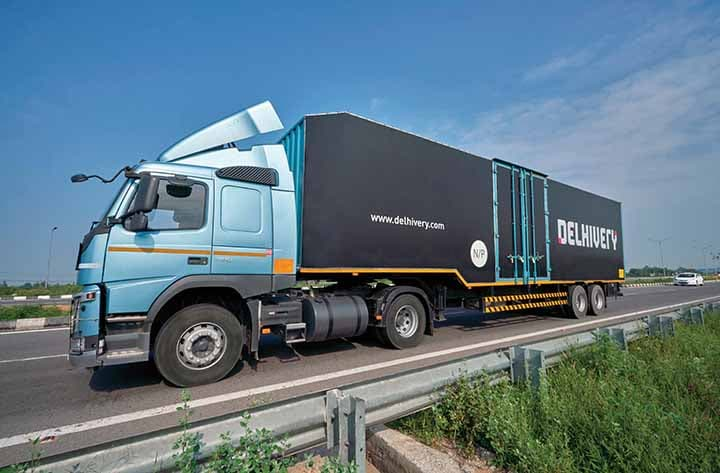
All transport vehicles with yellow plates must have a valid FC, including:
- Goods carriers (LCVs, HCVs) – for example DL1L, DL1M series.
- Contract carriage taxis such as tourist taxis and DL1RT series cabs.
- Auto-rickshaws & e-rickshaws with commercial registration.
- School buses, staff buses, company buses.
- RTVs / cluster buses, mini / midi buses.
- Aggregator cabs (Ola, Uber etc.) with Delhi commercial registration.
Even if a vehicle visually looks like a private car, if its registration category is transport, a valid
Fitness Certificate is compulsory.
Vehicles needing permit renewal / countersignature
No stage carriage, contract carriage or tourist bus/taxi permit in Delhi or NCR is renewed without a valid
FC updated in the Vahan system.
Vehicles asking for NOC or "Conversion" fitness in Delhi
A valid FC is also important when:
- A Delhi-registered commercial vehicle seeks NOC to another state.
- A vehicle seeks conversion – for example, change of body type or permit category.
The Delhi Transport Department lists services such as Renewal of Fitness Certificate, Duplicate Fitness
Certificate and Fitness for NOC / Conversion – all largely aimed at transport vehicles.
2.2 Private vehicles registered outside Delhi but running inside Delhi
If your car is registered in another state (for example HR26, UP16), FC/registration renewal is handled
by that state RTO. However, in 2025, fuel-ban and ELV rules in Delhi still apply to vehicles that cross
10 years (diesel) or 15 years (petrol) while operating inside the city, a development also highlighted by
Hindustan Times in its coverage of the no-fuel rule for ELVs
.
Practically, you may hold a valid FC from your home state, but if the vehicle is overage under Delhi rules,
it should not be refuelled or used in Delhi.
If you decide to move such a vehicle out of Delhi permanently rather than run it under Delhi ELV limits,
you will likely need a NOC (No Objection Certificate). For example, Fateh Legacy helps with NOC-related
work through services like:
NOC in DL09 (Palam, Delhi) – Support for moving vehicles out of Delhi
3. ELVs & the 2025 fuel-ban: why fitness alone is not enough in Delhi
3.1 No fuel for old diesel/petrol vehicles
From 1 July 2025, Delhi began strictly enforcing a no-fuel rule for ELVs — diesel vehicles older
than 10 years and petrol vehicles older than 15 years at petrol pumps. Even if such a vehicle
hypothetically had fitness from some other state, Delhi petrol pumps are not supposed to refuel it.
But beyond fuel, the underlying 10-year diesel / 15-year petrol ban under NGT / Supreme Court + CAQM
directions still stands. Once a Delhi-registered vehicle becomes an ELV, it simply cannot lawfully ply
in Delhi.
3.2 What this means for you in 2025
- If you own a 2014 diesel car registered in Delhi, it is already 11 years old in 2025 – an ELV – no FC,
no re-registration, not supposed to ply or refuel in Delhi.
- If you own a 2010 petrol car registered in Delhi, it is 15+ years old and treated as an ELV too.
- If your vehicle is commercial but still under the age limits (for example a 7-year-old diesel truck),
FC remains mandatory every year; without FC + PUC + permit, it can be impounded or pushed toward
scrapping under Delhi’s policy.
For vehicles with an active bank loan, hypothecation removal (HP removal) on the RC becomes important
before scrapping, sale or certain transfers. Fateh Legacy assists owners with this RC clean-up through services
such as:
Hypothecation Removal in DL13 (Surajmal Vihar, Delhi) – Clear bank loan from your RC
Clearing hypothecation is often a practical prerequisite before deciding whether to scrap, transfer or move
an overage vehicle out of Delhi.
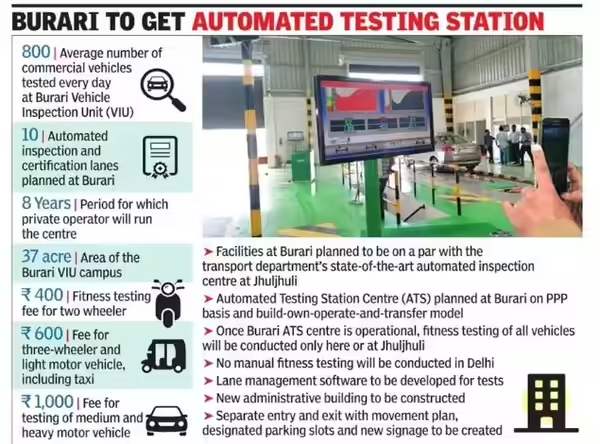
4. Delhi’s Automated Testing Stations (ATS): where FC tests actually happen
Delhi is steadily shifting vehicle fitness testing from manual, inspector-based checks to Automated Testing
Stations (ATS).
A model ATS at Jhuljhuli already conducts fully automated fitness tests covering brakes, suspension,
underbody, emissions and more with minimum human discretion, as reported by
The Times of India
. Subsequent reports have highlighted new facilities being set up at locations like Nand Nagri depot with
capacity to test tens of thousands of vehicles annually.
In 2025, most standard commercial vehicles in Delhi will find their fitness appointments scheduled at ATS
once they apply online. These centres are designed to be objective, transparent and technology-driven, reducing
subjectivity in pass/fail decisions.
5. Documents required for Fitness Certificate in Delhi (commercial vehicles)
For a typical Delhi-registered transport vehicle (for example DL1x series), keep the following documents ready
for FC-related work:
- Original RC (Registration Certificate) – smart card or digital (DigiLocker / Parivahan).
- Valid Insurance Certificate – at least third-party cover.
- Valid PUC Certificate – emissions within prescribed norms (very strictly checked in Delhi).
- Valid permit – goods carriage permit, tourist permit, contract carriage, RTV permit etc.
- Tax payment proof – road tax / MCD fees where applicable.
- Identity proof of the owner or authorised representative.
- Previous Fitness Certificate – if applying for renewal.
- Any special approvals – modifications, CNG/LPG kit endorsement, speed governor details where relevant.
Keep original physical documents handy even if details appear in Vahan; during surprise checks or ATS visits,
enforcement teams in Delhi often insist on seeing the originals.
If your RC is lost or badly damaged, it is wise to first obtain a Duplicate RC before FC-related work so
your vehicle data and ownership record are clear. Fateh Legacy supports this through services like:
Duplicate RC in DL11 (Rohini, Delhi) – If your RC is lost or damaged
6. Step-by-step: How to apply for Delhi Vehicle Fitness Certificate online
Most FC work in Delhi today is done through Parivahan/Vahan combined with Delhi Transport e-services
and ATS slot booking. A typical process looks like this:
Step 1 – Check age eligibility
First confirm that your vehicle is not overage under Delhi ELV rules:
- Diesel vehicles: age must be ≤ 10 years.
- Petrol vehicles: age must be ≤ 15 years.
If the vehicle is overage, focus on NOC or scrapping instead of fitness.
Step 2 – Ensure mobile number & records are updated
Make sure your mobile number is updated in Vahan/Sarathi, as MoRTH repeatedly recommends. Many services,
including FC, use OTP-based authentication.
Step 3 – Apply online for FC renewal / fresh FC
On the official Parivahan/Vahan portal or Delhi Transport online services:
- Select State: Delhi and your registering authority (for example, DL-01 Mall Road, DL-09 Janakpuri).
- Choose the relevant FC service – Renewal / Fresh / Duplicate / Fitness for NOC/Conversion.
- Enter key details like:
- Registration number
- Last 5 digits of chassis number
- Engine number if prompted
The system will show your vehicle details, FC expiry, tax and penalty (if any).
Step 4 – Pay FC fee, user charges & green tax (if applicable)
Fees depend on vehicle type and age.
After recent Union government revisions, FC tests for vehicles between 15–20 years can have significantly higher charges for motorcycles, three-wheelers, LMVs and heavy vehicles, a change highlighted by
The Times of India
.
For commercial vehicles in Delhi, expect:
- Fitness fee
- User charge for ATS
- Possible green tax / environment compensation for older but still permitted categories.
Step 5 – Book ATS slot
Once payment is successful, you can book a time slot at an Automated Testing Station such as Jhuljhuli,
Nand Nagri, Tehkhand or other notified centres. Try to choose a slot before FC expiry to avoid penalties and
permit issues.
Step 6 – Present the vehicle at ATS
On the test day, the actual vehicle must reach the ATS with:
- All original documents listed in the previous section.
- A driver holding a valid commercial driving licence (and badge, where required).
- The vehicle in good mechanical condition – no oil leaks, bald tyres, or non-working lights/wipers/horn.
The ATS runs automated tests on:
- Brakes (roller test)
- Side-slip & alignment
- Suspension
- Headlight aim
- Underbody
- Emissions
Step 7 – FC result & digital certificate
If the vehicle passes, its fitness status is updated in Vahan and a digital FC is issued, usually viewable
in Parivahan or DigiLocker. If it fails, you receive a defect sheet and a retest window after
rectifying faults (with applicable fees).
7. Offline / semi-offline FC scenarios in Delhi
Although Delhi promotes faceless / online services, some FC-related situations still involve
semi-offline or manual touchpoints:
- Very old permits or special-purpose bodies such as cranes or rigs may require initial scrutiny
at Zonal Office / STA before ATS booking.
- Where fitness has lapsed for a long period and permits are also expired with heavy penalties, owners
may be called to the concerned RTO/STA for clarification before FC is granted.
- In rare cases, vehicle owners who contest ATS results may represent their case to the Motor Vehicle
Inspector or higher authority.
However, for the vast majority of school buses, taxis, goods carriers and autos, application, fee payment
and slot booking are fully online, and the actual testing is at an ATS.
8. Penalties & enforcement if you run without FC in/around Delhi
Under the Motor Vehicles Act, driving without a valid Fitness Certificate can attract:
- Fines of around ₹2,000–₹5,000 for a first offence, and
- Up to ₹10,000 and imprisonment for repeat offences.
In addition, permits can be cancelled or suspended. Delhi and neighbouring states have repeatedly seized
buses and commercial vehicles that lacked FC or violated safety norms, sometimes after serious accidents.
Post ELV fuel-ban discussions, enforcement in Delhi increasingly relies on:
- ANPR cameras at fuel stations,
- Joint teams from Transport, Traffic Police and MCD, and
- Impounding + scrappage for overage or non-compliant vehicles.
For a Delhi commercial vehicle owner, running without FC is simply not worth the risk. A single random
check or accident can lead to seizure of the vehicle, heavy fines and long-term permit complications.
10. Practical Delhi use-cases (2025)
Case 1 – Okhla-based transporter with an 8-year-old diesel LCV
Vehicle: 2017 diesel LCV, Delhi-registered.
Status in 2025: 8 years old – still allowed, but needs annual FC.
The owner must:
- Apply online for FC renewal well before expiry.
- Book an ATS slot and ensure PUC, tax and insurance are valid.
- Plan the bigger decision before 2027, when the LCV will hit 10 years and become an ELV under
Delhi diesel rules.
Case 2 – Dwarka school with a 12-year-old CNG bus
Vehicle: 2013 CNG school bus, Delhi-registered.
Since ELV rules primarily target diesel and petrol, CNG buses may still be allowed subject to FC, PUC and
school-bus safety norms.
The school must:
- Maintain strict fitness schedules.
- Ensure all school bus safety requirements (emergency exits, fire extinguishers, speed governor etc.)
are met at the time of FC.
Case 3 – Delhi tourist taxi doing airport + outstation runs
Vehicle: Commercial Innova (DL1 taxi series) used for NCR and outstation runs.
Compliance must include:
- Annual FC at an ATS.
- Valid permit (often All India Tourist Permit).
- Up-to-date tax payments in all states regularly visited.
A failed fitness test during peak travel season can mean immediate business loss, so owners usually pre-check
tyres, brakes, lights and leakages a week or two before their ATS slot.
If you plan to eventually sell or transfer such a vehicle instead of continuing under the Delhi ELV regime,
you may also need clean ownership and RC records. Fateh Legacy supports this via:
Ownership Transfer in DL08 (Wazirpur, Delhi) – RC transfer & documentation support
11. Quick checklist for Delhi vehicle owners (2025)
- Know your vehicle age precisely from the RC (date of first registration), not memory.
- If diesel & 10+ years or petrol & 15+ years and Delhi-registered, treat it as an ELV – focus on
scrapping or NOC instead of FC.
- For commercial vehicles:
- Track the FC expiry date in a calendar.
- Apply online at least 30 days before expiry.
- Keep insurance, PUC, tax and permit valid at all times.
- Book ATS slots early at high-demand centres like Jhuljhuli or Nand Nagri.
- Use mParivahan / DigiLocker to store digital copies of RC, FC and insurance.
- If you receive any SMS or notice from the Transport Department regarding FC, do not ignore it – Delhi
enforcement drives are often sudden and strict.
Alongside vehicle FC, make sure your drivers hold valid driving licences mapped to the correct vehicle category.
If you or your drivers need help with DL services in West Delhi, Fateh Legacy also assists with:
Driving License in DL04 (Janakpuri, Delhi) – Fresh DL, renewals & upgrades
Conclusion
In 2025, managing a commercial or high-usage vehicle in Delhi requires more than just mechanical upkeep.
You must align with Fitness Certificate rules, ELV bans, ATS testing and permit conditions – all under the
spotlight of pollution control and stricter enforcement.
- Make sure your vehicle is within age limits — diesel up to 10 years, petrol up to 15 years for
Delhi registration.
- Track and renew FC, PUC, insurance and permits on time.
- Use the online Parivahan/Vahan systems and ATS slots wisely.
- When approaching the ELV boundary, plan for NOC, ownership transfer or scrapping instead of last-minute
panic.
If you feel stuck at any step — from FC renewal and ATS slots to NOC, Duplicate RC or hypothecation removal —
Fateh Legacy is ready to help you navigate Delhi’s RTO maze so that your vehicles remain legally and
operationally fit for the road.
How Fateh Legacy helps with Fitness Certificate & related RTO work in Delhi
A clean Fitness Certificate record rarely stands alone. In real life, Delhi vehicle owners face a chain of
linked issues: ELV bans, NOC requirements, hypothecation on RC, duplicate documents and DL compliance.
This is where Fateh Legacy can act as a structured RTO partner.
With Fateh Legacy, you get:
- Guided support for FC-related workflows – ensuring your vehicle is eligible, documents are in order
and ATS appointments are planned sensibly.
- Expert help with NOC and movement out of Delhi when ELV cut-offs are approaching.
- Support for ownership change, Duplicate RC and hypothecation removal so that your RC data is clean
before FC, NOC or scrapping.
- Assistance with driving licence services for owners and drivers so that vehicles and driver documents
are both compliant.
Unsure about Fitness Certificate, ELV status, NOC or RC issues in Delhi?
Fateh Legacy helps commercial vehicle owners, schools, fleets and individual operators across Delhi with
FC planning, NOC, hypothecation removal, Duplicate RC, ownership transfer and driving licence services, so
you can stay compliant without wasting time in queues.
Talk to our Delhi Transport Expert
Frequently Asked Questions
Do I need a fitness certificate for my private car in Delhi after 15 years?
No. In Delhi, petrol cars are not allowed after 15 years and diesel cars after 10 years. They are treated as End-of-Life Vehicles (ELVs), so FC renewal is not issued; the vehicle must be deregistered, scrapped or moved out through NOC (subject to policy and timing).
My diesel taxi is 7 years old (Delhi-registered). What is my FC pattern?
Up to 8 years of age, a commercial diesel taxi in Delhi typically gets FC validity for 2 years at a time. After 8 years, FC renewal usually becomes annual. Once the taxi crosses 10 years, the Delhi ELV rule for diesel vehicles applies and it cannot run in Delhi, regardless of FC.
I have a Haryana-registered petrol car that is 12 years old. Can I drive it in Delhi with valid FC from Haryana?
Your FC and registration are handled by Haryana, but Delhi's ELV and fuel-ban rules still apply when you drive inside Delhi. For a 12-year-old petrol car, the ELV cut-off has not yet triggered (15 years for petrol), but enforcement around GRAP and winter pollution can still mean more checks and restrictions.
Can I still go to Burari for manual fitness tests?
Delhi is moving away from manual fitness testing and making Automated Testing Stations (ATS) the default for commercial vehicles. Older centres like Burari are gradually being integrated into automated systems. For most standard taxis, buses and goods carriers, ATS-based testing is now mandatory.
What happens if my commercial vehicle fails fitness at an ATS in Delhi?
If your vehicle fails, you receive a defect list. After fixing the issues (for example brakes, tyres, emissions), you can rebook a retest slot, pay any retest fees and present the vehicle again. Until you pass, the vehicle is not legally fit for commercial operations in Delhi.
Is fitness mandatory for commercial vehicles running only within Delhi city limits?
Yes. All Delhi-registered transport vehicles — including autos, school vans and small goods carriers such as Tata Ace or Bolero Pickup — must hold a valid FC. Whether they operate only inside Delhi or also go to NCR/other states, they need timely FC renewals once they cross the initial age thresholds.
Do e-rickshaws and electric commercial vehicles in Delhi need a fitness certificate?
Yes. All commercial vehicles, including electric e-rickshaws and electric delivery vans, require FC. While EVs are not covered by the 10-year/15-year fuel-type age bans, they still need periodic fitness renewal to confirm structural integrity, braking efficiency and safety features.
What if I miss my fitness renewal date by a few weeks in Delhi?
The vehicle can usually still get FC renewed after expiry, but you may need to pay late fees or penalties. You also risk permit problems and on-road penalties if caught during the lapse period. Occasionally, Delhi announces temporary waivers on penalties for certain fleets, but these are rare and should not be assumed.
Can I get a Fitness Certificate for a Delhi-registered diesel vehicle that is 11 years old?
No. Once a Delhi-registered diesel vehicle crosses 10 years from the date of first registration, it becomes an End-of-Life Vehicle (ELV) under NGT/CAQM directions. FC renewal is not allowed, the vehicle cannot be refuelled or used in Delhi, and the realistic options are scrapping or applying for NOC to another state (if policy timing still permits).
Is manual fitness testing still allowed at older centres like Burari in 2025?
For the vast majority of commercial vehicles, Delhi is converging on ATS-only fitness testing. Manual testing may survive only for a few special-purpose vehicles under specific directions. For 99% of taxis, goods carriers, school buses and autos, plan for ATS-based FC rather than manual checks.