Introduction
Delhi’s pollution control rules are getting stricter in 2025. Under NGT and
Delhi Government directives, 10-year-old diesel and 15-year-old petrol vehicles are treated
as End-of-Life Vehicles (ELV) within Delhi.
This means your vehicle cannot legally run, be parked on public roads, renewed or sold within Delhi NCR.
In fact, Delhi has also moved toward fuel-denial and tech-led enforcement for overage vehicles at petrol pumps
in different phases — so many owners first discover the issue at a fuel station. If you want a quick explainer of how
that plan works on-ground, this is a helpful read:
Indian Express: how Delhi plans to remove overage vehicles (fuel-ban + scrapping workflow).
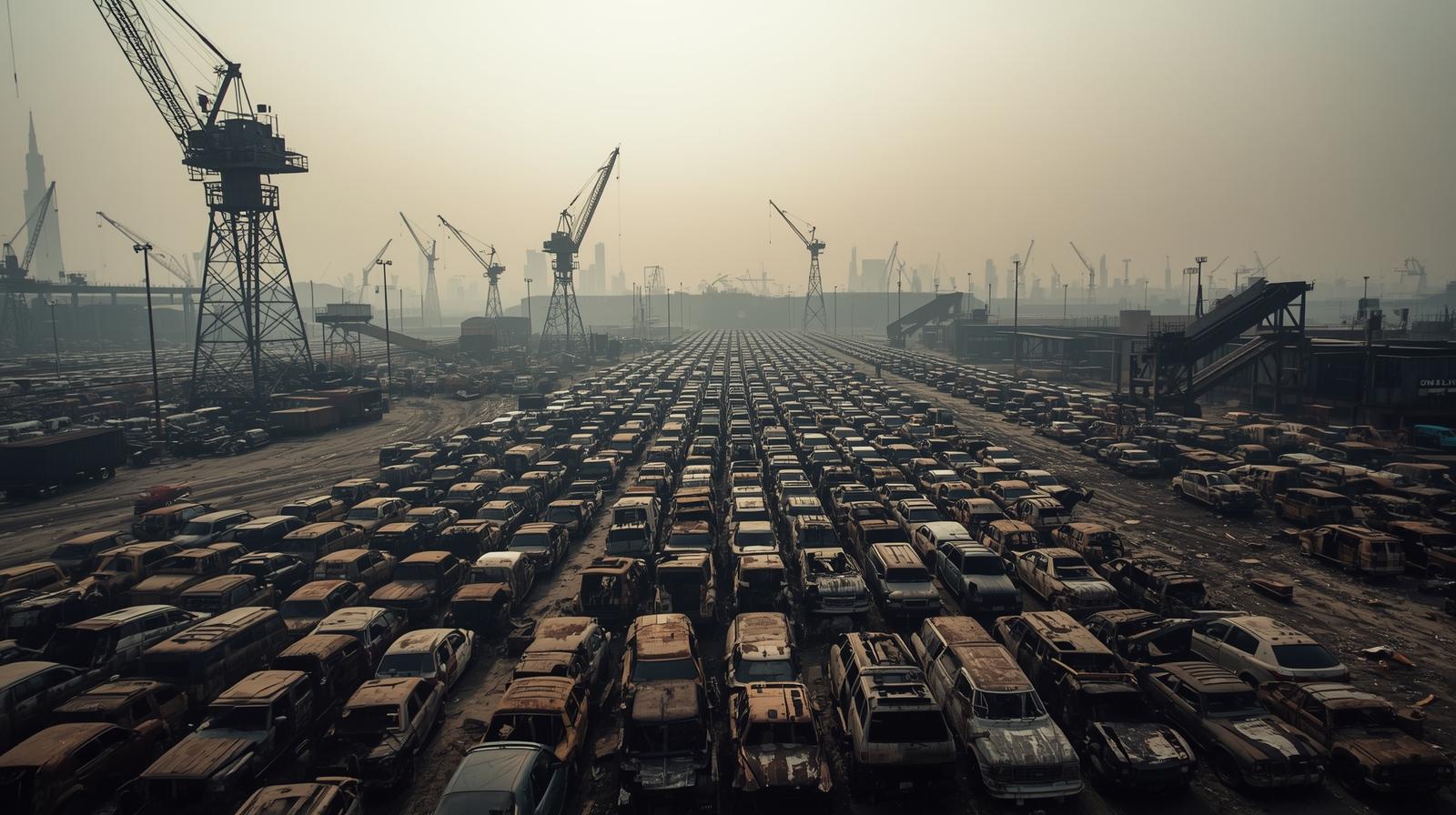
If you live in New Delhi, North Delhi, Rohini, Dwarka, Janakpuri, Saket, East Delhi or Central Delhi,
this guide explains exactly:
- What happens when your car crosses the 10-year (diesel) or 15-year (petrol) limit
- What Delhi Vehicle Scrapping Policy 2025 says in simple language
- What fines, seizure and ELV marking mean for you
- How to legally scrap, take NOC or transfer your vehicle outside Delhi
You will also find direct links to Delhi RTO-backed services like NOC, ownership transfer,
hypothecation removal, duplicate RC and driving licence support through Fateh Legacy.
1. What is the Delhi Vehicle Scrapping Policy 2025?
Delhi follows the National Green Tribunal (NGT) and Delhi Government orders that:
- Ban diesel vehicles older than 10 years in Delhi
- Ban petrol vehicles older than 15 years in Delhi
Once your vehicle hits this age limit, it is treated as an End-of-Life Vehicle (ELV).
The Delhi RTO system gradually marks such RCs as "Cancelled – ELV" and:
- No renewal is allowed
- No fitness certificate is issued in Delhi
- No re-registration is permitted in Delhi NCR
In simple terms, you must:
- Scrap the vehicle at an authorised scrappage centre, or
- Apply for NOC and shift the vehicle outside Delhi, or
- Transfer ownership outside Delhi NCR after NOC and re-registration.
Official references you can check for the latest circulars:
2. What happens if you keep driving these old vehicles in Delhi?
If you continue to run a 10-year-old diesel or 15-year-old petrol car in Delhi NCR,
you risk strict enforcement action under the Motor Vehicles Act and pollution control orders.
Key consequences include:
1) Immediate seizure (impounding)
Delhi Police and Transport/Enforcement teams have the power to seize such vehicles on the spot.
In many cases, old vehicles caught on the road are directly towed and moved to designated yards.
News reports have repeatedly highlighted crackdowns where hundreds of overage vehicles were impounded during drives
(for example:
Economic Times: Delhi resumes crackdown; overage vehicles impounded).
2) Fine up to ₹10,000
Running a banned ELV vehicle can attract a fine of up to ₹10,000, along with additional charges
for towing, parking and compounding – depending on the case and applicable sections.
3) Vehicle sent directly for scrapping
Once your vehicle is treated as ELV and impounded, it may be sent directly to an authorised
scrappage centre. In many situations, vehicles are not released back to the owner, even if the
fine is paid.
If your RC is already marked as "Cancelled – ELV" in the system, no new service like fitness,
renewal or local transfer can be processed within Delhi.
3. Why the strict age ban applies only in Delhi NCR
Delhi has one of the highest vehicular pollution densities in India.
Areas like Anand Vihar, ITO, Jahangirpuri, Rohini, Okhla and Wazirabad frequently record
dangerous AQI levels during winter months.
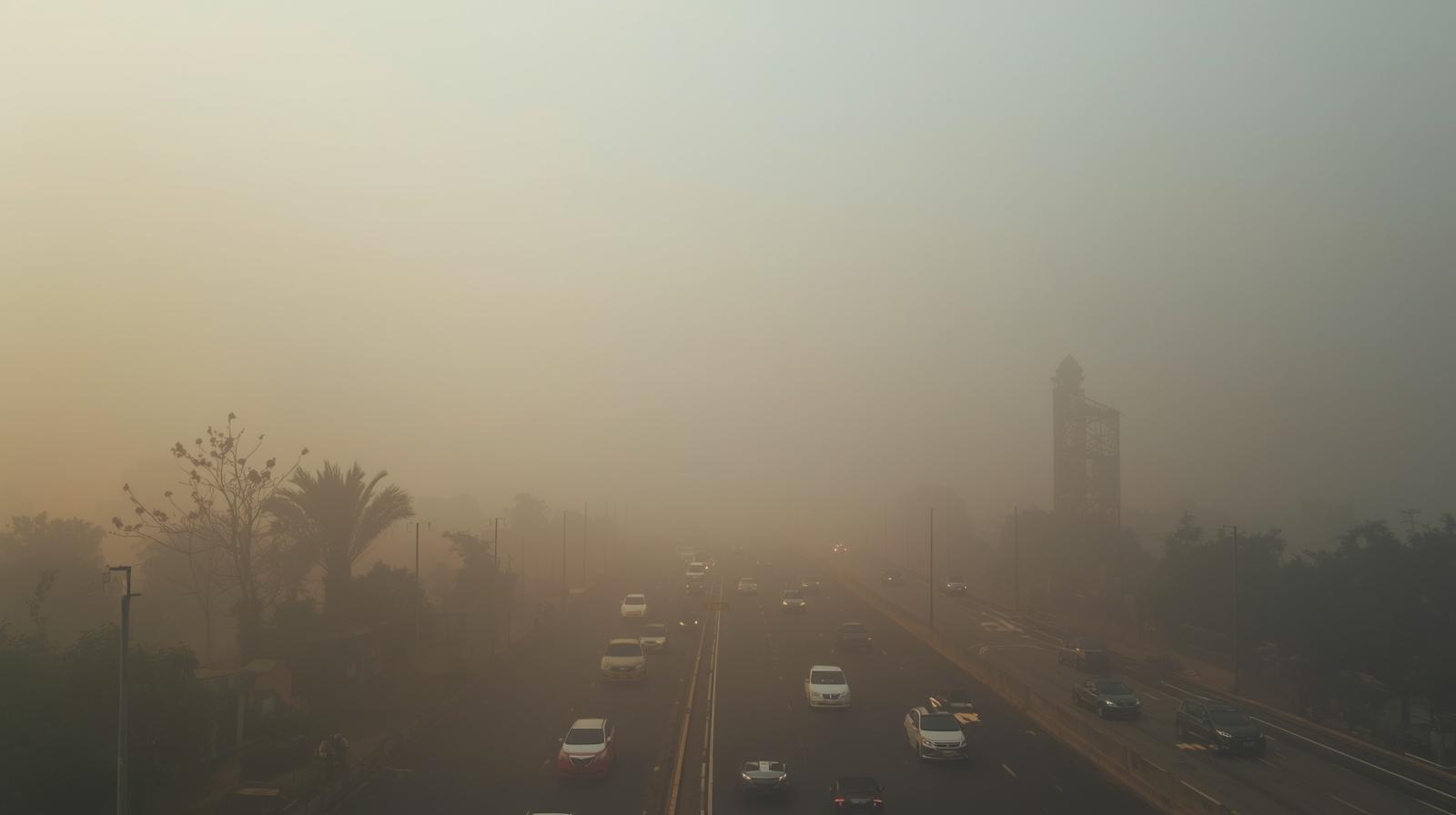
The NGT and pollution control bodies have repeatedly directed Delhi to implement
stricter age-based bans compared to other cities so that:
- Highly polluting old vehicles are removed from Delhi roads
- Road-side and winter smog levels can be gradually reduced
- Long-term health risks for residents can be controlled
You can see real-time air quality and historical data on the official portal:
Central Pollution Control Board – Air Quality
Also, enforcement is increasingly linked with ANPR-based identification of end-of-life vehicles at fuel stations
and public spaces — a change that many owners miss until the day it impacts them.
(Reference:
Hindustan Times: end-of-life vehicles to be seized at Delhi fuel stations.)
4. What you can legally do with your old vehicle in 2025
If your vehicle has crossed the 10-year diesel or 15-year petrol limit in Delhi,
you currently have three practical options:
Option 1: Scrap the vehicle at an authorised scrappage centre
A government-authorised scrappage facility will:
- Inspect your End-of-Life Vehicle (ELV)
- Remove usable parts and materials
- Issue an official Scrapping Certificate
- Send details to the Delhi RTO for final deregistration
Benefits of scrapping:
- Receive scrap value payment (often ₹15,000 – ₹90,000 depending on model & condition)
- Eligibility for road tax rebate on a new vehicle in some cases
- Manufacturer discounts on new vehicle purchase under scrappage schemes
The broader scrapping framework is guided by the national policy:
MoRTH – Vehicle Scrapping Policy
Option 2: Apply for NOC to another state (if vehicle is still mechanically good)
If your diesel/petrol car is old by age but still mechanically fit, many owners choose to move it to:
- Haryana – Faridabad, Gurugram outskirts, Sonipat, Rohtak
- Uttar Pradesh – Noida, Greater Noida, Ghaziabad, Meerut
- Punjab, Rajasthan, Uttarakhand and other states
You must first get a No Objection Certificate (NOC) from the Delhi RTO.
For a detailed Delhi-North zone guide, see:
NOC in DL01 (North Delhi) – When it is needed & how to apply
With NOC, your vehicle can be:
- Re-registered in another state
- Legally transferred outside Delhi NCR
- Saved from scrapping if it is still in good condition
Option 3: Transfer ownership (outside Delhi only)
Within Delhi, ownership transfer for banned ELV vehicles is not permitted.
But outside Delhi, you can still sell the vehicle after:
- Getting NOC from Delhi RTO
- Completing re-registration in the buyer’s state
If you are selling in locations like Sonipat, Jhajjar, Meerut, Rohtak or Jaipur, you must ensure
proper RC transfer so that future liability does not remain in your name.
Ownership Transfer in DL02 (New Delhi) – Complete support by Fateh Legacy
If you want a simple “what happens at petrol pumps / how owners get flagged” walkthrough (very relevant before you take a decision),
this report explains the process clearly:
NDTV: day-1 of old vehicle fuel-ban; vehicles seized.
5. Documents required for scrapping or NOC in Delhi (2025)
Whether you choose to scrap your vehicle or take an NOC, keep the following documents ready:
- Original RC (Registration Certificate)
- PAN Card of the owner
- Aadhaar Card or other ID proof
- Insurance (may be optional for scrapping but helpful)
- Valid PUC (for NOC / some cases)
- Clear engine & chassis photographs
- Owner’s signature & self-attested forms as required by RTO/scrappage centre
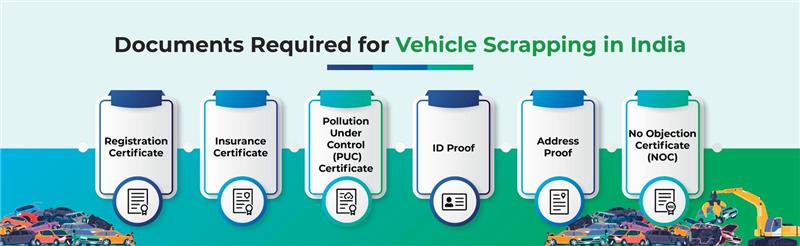
Having a complete document set helps you avoid repeated visits to the RTO and speeds up both
scrapping and NOC issuance.
6. Delhi RTOs handling vehicle scrapping & NOC cases in 2025
The following Delhi RTOs see the highest scrapping and NOC applications for old vehicles:
- DL01 – North Delhi (Mall Road)
- DL02 – New Delhi (Tilak Marg / IP Estate)
- DL03 – South Delhi (Sheikh Sarai)
- DL04 – West Delhi (Janakpuri)
- DL06 – Central Delhi (Sarai Kale Khan / Sarojini Nagar zone)
- DL09 – Rohini
- DL10 – Dwarka
- DL13 – East Delhi (Surajmal Vihar / Mayur Vihar)
You can also take specialised support for related services:
7. How to scrap a vehicle in Delhi — Step-by-step (2025)
Here is a simple step-by-step flow to scrap your vehicle legally in Delhi:
- Step 1: Check vehicle age & RC status on Parivahan to see if it is marked as ELV / nearing age limit.
- Step 2: Choose a Delhi-authorised scrappage centre registered under the scrapping policy.
- Step 3: Share RC, ID, photos and sign the required forms with the authorised centre.
- Step 4: Vehicle is inspected, parts are removed and it is dismantled as per norms.
- Step 5: You receive a Scrappage Certificate (often with photos/video proof of dismantling).
- Step 6: The centre uploads details to the RTO; your vehicle is officially deregistered.
- Step 7: Use the certificate for road tax refund (where applicable) and
new car discount from manufacturers that offer scrappage benefits.
Many manufacturers like Maruti, Hyundai, Tata, Mahindra and others periodically run
scrappage-linked schemes – check their latest offers when planning a new purchase.
If you’re curious how scrapped/seized vehicles are handled at the municipal level (and why record-keeping matters),
this report is eye-opening:
The Indian Express: end-of-life vehicles, scrapping facilities, and scrap value deposit issue.
8. Penalty charges for non-compliance in Delhi 2025
If you ignore the scrapping policy and continue using or parking banned vehicles in Delhi, you may face:
| Violation |
Typical Outcome / Penalty |
| Driving a banned 10-year diesel / 15-year petrol vehicle |
Fine up to ₹10,000 + possible towing and impounding |
| Vehicle seized during enforcement drive |
Generally not released; sent directly for scrapping |
| RC marked as "Cancelled – ELV" |
No renewal, no fitness, no re-registration allowed in Delhi |
| Using false documents / tampering with RC |
Police case and legal action under relevant MV Act and IPC sections |
Because enforcement drives are often conducted in high-traffic zones like Dwarka, Rohini, Lajpat Nagar,
Karol Bagh, Pitampura, East Delhi and Connaught Place, it is safer to regularly check your RC status
and act before the vehicle is seized.
Also note: Delhi has deployed joint teams at different times for stricter ELV enforcement and fuel-ban implementation,
with fines/towing/parking charges outlined in reporting like this:
The New Indian Express: joint teams to enforce fuel ban on ELVs (fines + towing).
9. Should you scrap or take NOC? — Simple recommendation
If you are confused between scrapping your vehicle and moving it out of Delhi, use this simple rule-of-thumb:
Scrap the vehicle if:
- Your car is 10+ year diesel or 15+ year petrol and heavily used
- The RC is already marked "Cancelled – ELV" in the system
- The vehicle is not worth major repair or restoration
- You are planning to buy a new, cleaner vehicle soon
Take NOC and shift outside Delhi if:
- The vehicle is mechanically strong and well-maintained
- You have a buyer outside Delhi or are moving to another state yourself
- You want to continue using the vehicle where age norms are different
In both scenarios, make sure to:
- Clear hypothecation if there is an active loan
- Fix any RC errors (name, address, engine/chassis details)
- Keep copies of Scrappage Certificate or NOC & sale documents safely
Many Delhi vehicle owners find it useful to consult
RTO agents in Delhi before deciding — since the right choice between scrapping
and NOC often depends on RC status, loan records and destination state norms
that are easy to miss without familiarity with the process.
For hypothecation-related clean-up in busy zones like DL06 (Central Delhi), you can refer to:
Hypothecation Removal in DL06 (Central Delhi) – Step-by-step assistance
Conclusion
Delhi’s Vehicle Scrapping Policy 2025 ensures that old, high-emission vehicles do not keep adding to
the city’s pollution load. The rule is simple and applies uniformly – whether you live in
Dwarka, Rohini, Lajpat Nagar, Karol Bagh, Pitampura, East Delhi or Connaught Place:
- 10-year diesel vehicle = banned in Delhi
- 15-year petrol vehicle = banned in Delhi
Your practical choices are to scrap the vehicle, take NOC and move it outside Delhi,
or transfer ownership outside NCR after proper documentation.
Ignoring the rules can lead to fines, seizure and forced scrapping without any planning.
A good habit (especially in winter months) is to track enforcement updates and policy tightening — because drives and checks often rise before peak-smog weeks.
How Fateh Legacy helps with Delhi scrapping, NOC & RC work
Delhi’s vehicle scrapping and ELV rules are strict – and the backend documentation can be confusing.
This is where Fateh Legacy acts as your RTO partner across Delhi.
With Fateh Legacy, you get:
- End-to-end documentation help for NOC and ownership transfer outside Delhi NCR
- Guided support for hypothecation removal and duplicate RC before scrapping or sale
- Checklists to ensure your case is RTO-compliant the first time, avoiding rejections and penalties
Unsure whether to scrap, take NOC or sell outside Delhi?
Fateh Legacy helps Delhi vehicle owners with NOC, scrapping coordination, ownership transfer,
hypothecation removal, duplicate RC and driving licence services across DL01, DL02, DL03, DL04,
DL06, DL09, DL10 and DL13 so you don’t make costly mistakes under the 2025 scrapping rules.
Talk to our Delhi RTO Expert
Frequently Asked Questions
Can I drive a 10-year-old diesel car in Delhi if it has a valid PUC?
No. A valid PUC does not override the age-based ban. If your diesel car is 10 years old in Delhi, it is treated as an End-of-Life Vehicle (ELV) and cannot be legally driven on Delhi roads.
Can I keep my old diesel or petrol car inside my private property in Delhi?
Yes, you can keep it inside private premises, but you cannot park it on public roads or drive it in Delhi once it is banned by age.
Can a vehicle be re-registered in Delhi after scrapping?
No. Once a vehicle is scrapped and deregistered, the process is permanent. The RC is cancelled as ELV and cannot be re-registered in Delhi.
Can I shift my Delhi number car to Haryana or Uttar Pradesh?
Yes, but only with a valid NOC from the Delhi RTO. After getting NOC, you must re-register the vehicle in the new state. For a North Delhi guide, see the NOC service page for DL01.
What is the typical scrap value of a car in Delhi?
Scrap value usually ranges between ₹15,000 and ₹90,000, depending on the car’s model, size, condition and metal weight. Authorised scrappage centres give you an exact quote.
Which Delhi RTOs handle most scrapping and NOC cases?
RTOs like DL01 (North Delhi), DL02 (New Delhi), DL06 (Central Delhi), DL09 (Rohini) and DL13 (East Delhi) see the maximum ELV scrapping and NOC applications in 2025.
Can I remove hypothecation before scrapping my vehicle in Delhi?
Yes. It is recommended to remove hypothecation if your car is still under loan, so that RC records are clean. You can use services such as Hypothecation Removal in DL06 (Central Delhi) for proper closure.
What happens to seized old vehicles in Delhi?
Seized old vehicles that fall under the ban are generally not released back. They are moved to impound yards and then sent to authorised scrappage centres as per ELV norms.
Do commercial vehicles also face this age ban in Delhi?
Yes. Commercial vehicles are also subject to fitness and age norms. Many categories face strict timelines and are required to pass fitness tests or be scrapped when considered unfit or too old.
What if my RC does not yet show any age warning or ELV status?
If your RC does not show an ELV warning yet, still check age on Parivahan because systems are updated periodically. If your vehicle is close to the 10-year (diesel) or 15-year (petrol) mark, plan your scrapping or NOC in advance.