Introduction
Delhi's winter pollution crisis returns every year, and in 2025 the
Graded Response Action Plan (GRAP), enforced by the Commission for Air Quality Management (CAQM),
has become stricter than ever. If you own a private car, scooter, cab, goods vehicle or operate a
commercial fleet in Delhi, GRAP directly affects how you drive, maintain, transfer and renew documents
for your vehicle.
This clear, beginner-friendly guide explains:
- What GRAP is and how CAQM implements it across Delhi NCR
- How each GRAP stage affects vehicles and transport
- Impact of GRAP on RTO work, RC transfer, PUC, NOC, fitness and scrapping
- Which vehicle owners are most affected in Delhi
- Practical tips to avoid challans, delays and last-minute RTO problems
1. What is GRAP? A simple explanation for Delhi residents
GRAP (Graded Response Action Plan) is a tier-based pollution control policy designed to
reduce air pollution in Delhi NCR. It is activated in stages depending on how poor
Delhi's Air Quality Index (AQI) becomes.
GRAP is implemented by CAQM with support from:
- Delhi Pollution Control Committee (DPCC)
- Delhi Traffic Police
- Transport Department & Delhi RTO zones
- MCD and other civic agencies across Delhi
Explained: What is GRAP and how is it implemented? – Indian Express
2. Why GRAP matters for Delhi vehicle owners
Every winter, Delhi faces severe air pollution because of multiple factors:
- Stubble burning in neighbouring states
- Very high number of diesel and petrol vehicles
- Industrial emissions from nearby areas
- Construction dust and roadside debris
- Weather inversion that traps smog close to the ground
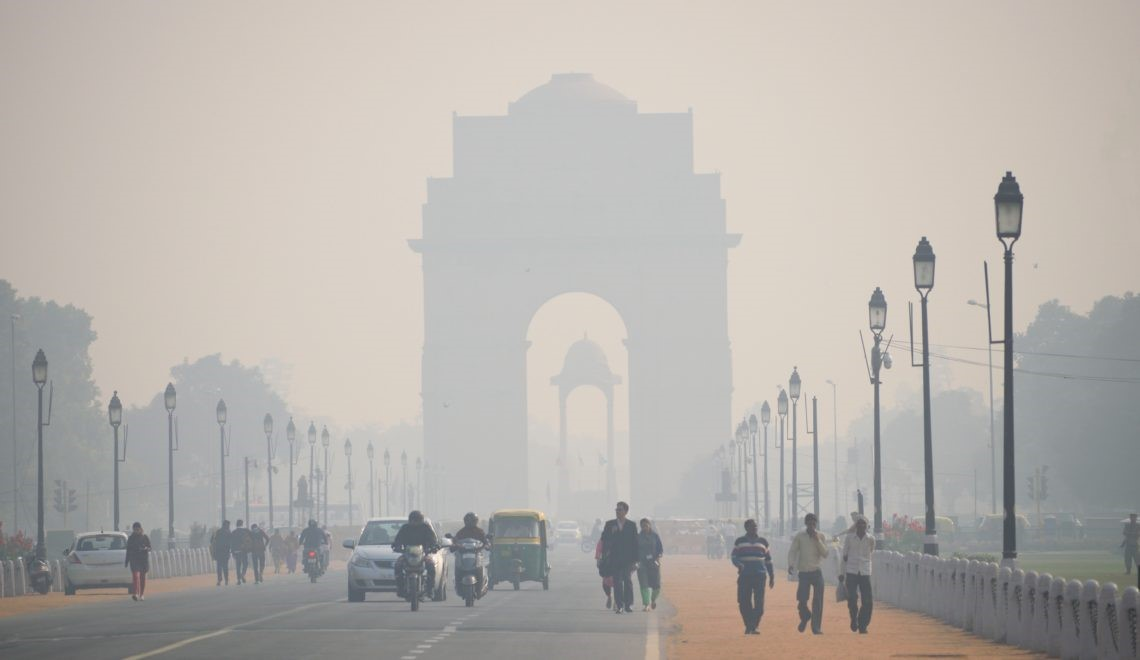
Among all these, vehicular pollution is one of the biggest contributors, especially in a dense city
like Delhi. Because of this, GRAP directly influences:
- How and when vehicles can operate inside Delhi
- Which vehicles are allowed to enter Delhi from borders
- How emissions are checked through PUC and enforcement drives
- Whether a vehicle gets NOC or fitness approval
- How smooth or difficult RC transfer and renewal becomes during peak pollution
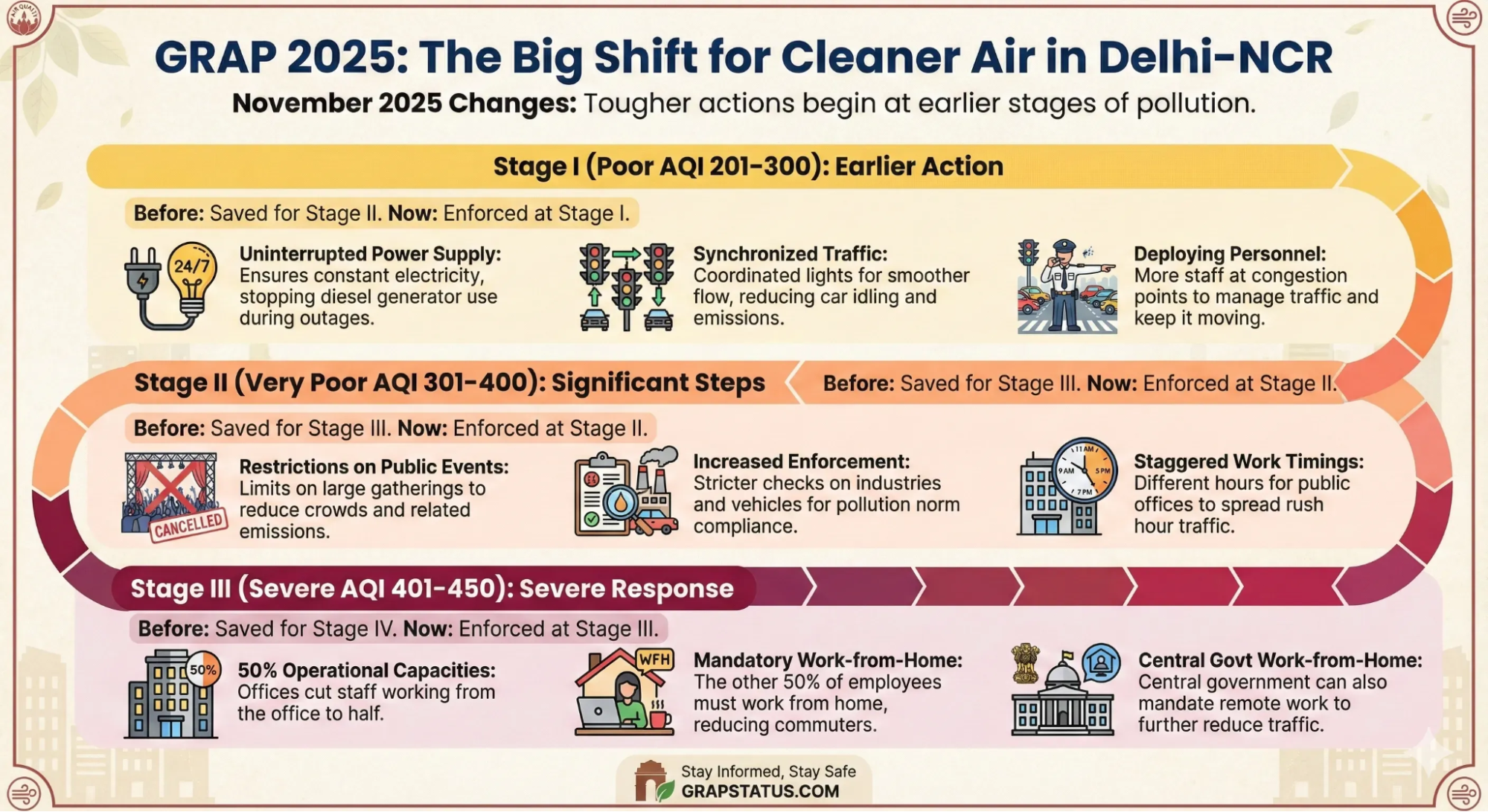
3. GRAP stages in Delhi (2025 updated)
CAQM defines four GRAP stages. The higher the AQI, the stricter the controls.
The official stage-wise rules are detailed in the CAQM GRAP guidelines and several public explainers such as the
Vajiram & Ravi GRAP overview
also break down these four stages in simple language for residents
| Stage |
AQI Range |
General Description |
| Stage 1 |
201–300 |
Poor |
| Stage 2 |
301–400 |
Very Poor |
| Stage 3 |
401–450 |
Severe |
| Stage 4 |
450+ |
Severe+ |
Here is how each stage typically affects vehicle owners in Delhi:
Stage 1: AQI 201–300 (Poor)
- Increased PUC checks at Delhi borders and inside city zones
- Crackdown on visibly polluting vehicles
- Alerts sent to vehicle owners about expiring PUC
- Extra monitoring around hotspots like Anand Vihar and Punjabi Bagh
Under this stage, Delhi residents notice more checkpoints where police and transport officials
verify emission compliance.
Stage 2: AQI 301–400 (Very Poor)
- Stricter checks for trucks entering Delhi
- Ban on diesel generator sets (with few exceptions)
- Advisories to reduce personal vehicle use and promote public transport
- Goods vehicles face added scrutiny at entry borders
Stage 3: AQI 401–450 (Severe)
This is where vehicle rules become much stricter:
- BS-III petrol and BS-IV diesel cars may be banned on Delhi roads
- Non-essential goods vehicles are not allowed to enter Delhi
- Diesel commercial vehicles face tougher emission tests and checks
- RTO processes like RC transfer or fitness checks may slow down due to restrictions
Whenever pollution touches "Severe" levels, these bans are triggered quickly and can remain in force
until AQI improves.
Stage 4: AQI 450+ (Severe+)
This is an emergency level. Delhi sees the strongest anti-pollution actions:
- Complete ban on most diesel LMVs except essential services
- Ban on all truck entry into Delhi
- Heavy construction activities stop in the city
- Mass PUC and emission inspections across Delhi districts
CAQM's Stage 4 actions clearly focus on emergency response to protect public health when air quality
becomes extremely hazardous.
4. Recent GRAP developments in Delhi (2025)
In the 2024–2025 winter season, Delhi has already seen multiple GRAP activations and relaxations.
News reports show how quickly stages can change:
- Major newspapers reported that GRAP Stage 3 was activated when AQI crossed into the
Severe category early in winter, as highlighted in a
Hindustan Times update on GRAP-3 curbs .
- After a mild improvement in a few monitoring stations, CAQM temporarily lifted Stage 3
restrictions, only to consider them again when pollution rose.
- Other reports showed AQI readings nearing 380–400, proving how fast Delhi's air can
deteriorate despite short-term improvements.
These fluctuations are the main reason why Delhi vehicle owners must follow GRAP updates closely.
One week your vehicle may be allowed, and the next week it may face a temporary ban or stricter checks
depending on the stage in force.
5. How GRAP affects RTO services in Delhi
GRAP does not only control traffic movement; it also indirectly affects RTO processes and approvals.As per recent enforcement under GRAP-3,
Delhi-NCR has implemented GRAP 3, banning BS-III petrol and BS-IV diesel vehicles» till air quality improves
— a restriction that implicitly affects services like RC transfer, fitness checks, PUC issuance and re-registration for affected vehicles.
Here is how different services are impacted:
1. RC Transfer
- Diesel vehicles older than 10 years cannot be transferred or re-registered in Delhi.
- Petrol vehicles older than 15 years cannot be re-registered in Delhi.
- During Stage 3 and Stage 4, RC transfer appointments and inspections may slow down due to
special drives and tighter enforcement at RTOs.
2. NOC (To transfer vehicle outside Delhi)
- Vehicles that fail emission norms or have poor PUC history may be denied NOC.
- Delhi RTOs check PUC history and challan status carefully before granting NOC.
3. Fitness Certificate
- Fitness centres like Burari become stricter during higher GRAP stages.
- Diesel commercial vehicles face the toughest scrutiny and may require repeated checks.
4. PUC Certificate
- Frequent surprise PUC checks at petrol pumps and roadside camps.
- Higher risk of e-challans under Stage 1, 2 and 3 for expired or missing PUC.
- Older vehicles are flagged more often for additional inspection.
5. Vehicle Scrapping
- End-of-Life (ELV) vehicles – old diesel and petrol vehicles beyond permitted age – cannot
operate legally once GRAP and Delhi rules bar them.
- For many owners, scrapping becomes the only legal option to avoid repeated challans and
impounding.
6. Who is most affected in Delhi?
While GRAP affects everyone, certain groups of vehicle owners feel the impact more strongly. As noted in NDTV report on how GRAP restrictions affect commuters and vehicle users.
- Daily office commuters driving into central business areas
- Taxi and auto drivers who depend on daily trips for income
- Delivery vehicles used by e-commerce, food and courier companies
- School vans and buses carrying children in high-pollution months
- Diesel goods carriers that enter and exit Delhi from different borders
- Owners of old petrol vehicles (15+ years) and old diesel vehicles (10+ years)
For these categories, one GRAP announcement can completely change their work schedule, route planning and RTO tasks.
7. Practical tips for Delhi vehicle owners
To stay safe and compliant during the GRAP season, Delhi vehicle owners should follow these practical steps:
- Always maintain a valid PUC – a large portion of challans come from expired PUC.
- Avoid using older diesel vehicles during Stage 3 and Stage 4 when bans are likely.
- Plan RC transfer, NOC and fitness renewals before the winter pollution peak if possible.
- Keep DigiLocker or mParivahan copies of all important vehicle documents.
- Regularly track GRAP updates via CAQM orders and reliable news portals.
Many fleet operators and vehicle owners who deal with GRAP-linked compliance regularly work with
Delhi RTO agents to plan RC transfers, NOC applications and fitness renewals
well ahead of the winter season — since RTO processing tends to slow down once GRAP
Stage 3 or 4 is active and enforcement drives intensify.
By staying one step ahead, you can save both time and money and avoid last-minute surprises at Delhi RTOs.
How Fateh Legacy helps with GRAP & Delhi RTO work
Because GRAP rules change quickly, many Delhi residents get confused about what they can and cannot do
with their vehicles. Fateh Legacy acts as your RTO partner to help you stay compliant and avoid
unnecessary penalties.
With Fateh Legacy, you can:
- Get guidance on RC transfer, NOC, vehicle scrapping and fitness under current GRAP rules.
- Understand whether your old petrol or diesel vehicle is legally usable in Delhi.
- Receive document checklists so your paperwork is correct before visiting RTOs.
- Take help with pending challans, address changes and hypothecation removal that affect RTO approvals.
Confused about GRAP, challans or RC status in Delhi?
Fateh Legacy assists Delhi vehicle owners with RC transfer, NOC, fitness, scrapping and challan-related
issues so that you stay compliant with GRAP and Delhi RTO rules without wasting time in queues.
Talk to our Delhi RTO Expert
Conclusion
GRAP is not just an environmental policy in Delhi 2025 – it directly affects your vehicle's
movement, documentation and legality. Understanding GRAP stages helps Delhi residents avoid
challans, delays or suspension of services related to RC, NOC, fitness and PUC.
By following the tips in this guide, keeping PUC and documents up to date, and planning RTO work ahead of
the winter season, you can keep your vehicle safe on Delhi roads and reduce the stress caused by sudden
restrictions whenever AQI worsens.
Frequently Asked Questions
What is GRAP in Delhi?
GRAP (Graded Response Action Plan) is a stage-wise anti-pollution plan enforced by CAQM for Delhi NCR. It links specific actions and restrictions to different AQI levels so that authorities can respond quickly when air quality deteriorates.
When does GRAP get activated in Delhi?
GRAP stages are triggered when Delhi's AQI rises above 200. As AQI moves from Poor to Severe+, stricter stages (Stage 1 to Stage 4) are activated with tougher controls on vehicles, construction and industrial activities.
How does GRAP affect my car or bike?
GRAP can affect your vehicle by increasing PUC checks, restricting certain fuel types or BS-category vehicles, and tightening rules for entry into Delhi. At higher stages, older diesel and petrol vehicles may face temporary bans on Delhi roads.
Does GRAP permanently ban old vehicles in Delhi?
GRAP itself is a seasonal and stage-wise plan. However, Delhi also has separate age rules – diesel vehicles older than 10 years and petrol vehicles older than 15 years cannot be used or re-registered in Delhi, regardless of GRAP.
Can I get RC transfer for a 12-year-old diesel car in Delhi?
No. Under Delhi's age norms, diesel vehicles above 10 years are treated as End-of-Life Vehicles. RC transfer or re-registration within Delhi is not allowed, and scrapping or moving the vehicle outside Delhi via NOC is usually the only legal option.
Will my PUC be checked more during GRAP season?
Yes. During GRAP, authorities conduct frequent surprise PUC checks across Delhi, especially near hotspots and entry borders. Driving with an expired PUC can result in e-challans and penalties.
Can GRAP affect my NOC or fitness certificate?
Indirectly, yes. When GRAP stages are high, RTOs and fitness centres become stricter with emission compliance. Vehicles failing emission norms or having poor PUC history may face delays or denial of NOC and fitness certificates.
Who is most affected by GRAP rules in Delhi?
Taxi drivers, auto drivers, delivery vehicles, school vans, goods carriers and owners of old petrol/diesel vehicles are usually hit hardest, as their daily income and operations depend on vehicle movement within GRAP-affected zones.
How can I stay updated about GRAP stage changes?
You can follow CAQM notifications, Delhi government announcements and updates from reliable news portals. Many news apps also send AQI and GRAP alerts which help vehicle owners adjust their plans quickly.
Can Fateh Legacy help me with GRAP-related RTO issues?
Yes. Fateh Legacy can guide you on RC transfer, NOC, scrapping, fitness and challan issues based on current GRAP and Delhi RTO rules, so you avoid penalties and process your paperwork correctly the first time.