Introduction
From 2023 to 2025, Delhi’s transport and logistics network has been reshaped by the
Graded Response Action Plan (GRAP), enforced by the
Commission for Air Quality Management (CAQM) and the
Transport Department, GNCTD. Whenever the
Air Quality Index (AQI) reaches Severe or Severe+, authorities tighten
controls through truck entry bans, BS-III/BS-IV diesel curbs and strict border checks,
directly impacting how goods move in and out of Delhi.
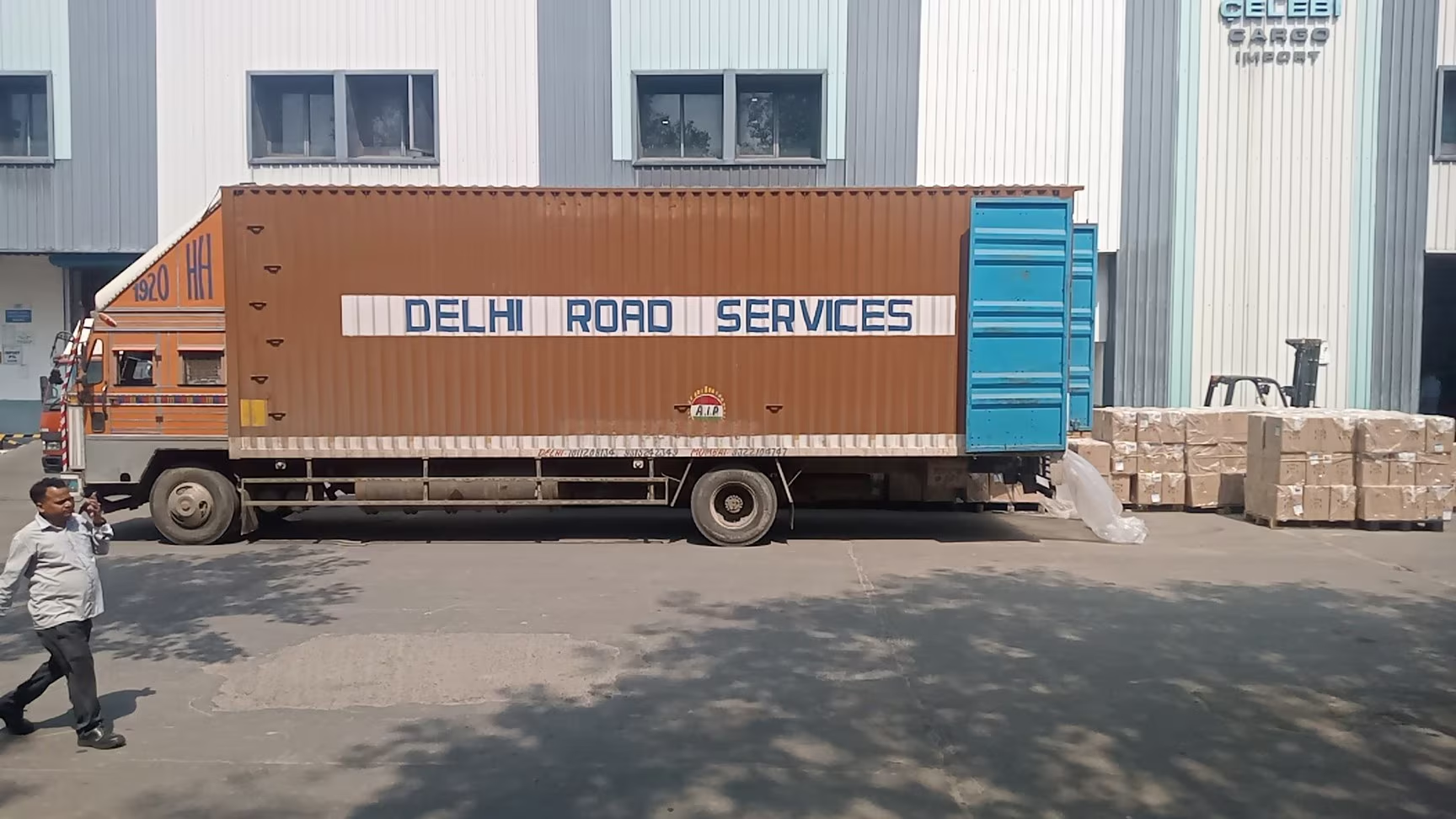
This blog focuses specifically on the transport & logistics impact of GRAP in Delhi and explains:
- What GRAP means for Delhi transport & logistics operations
- How BS-III/BS-IV bans and truck entry rules evolved between 2023–2025
- Real-world case study examples based on Delhi hubs and border routes
- A practical compliance checklist for fleet owners and logistics managers
- Why clusters like Okhla, Bawana, Mundka, Ghazipur, Azadpur and Dwarka must treat GRAP as a core planning factor
1. What is GRAP & why it targets Delhi vehicles
GRAP (Graded Response Action Plan) is a step-wise set of emergency actions that gets
triggered when Delhi’s AQI crosses different thresholds – Poor, Very Poor,
Severe, Severe+. For each stage, specific actions apply to:
- Construction & demolition (C&D) activity
- Industries and DG sets
- Road dust & waste burning
- And most importantly for this blog – transport & vehicle movement
For transport and logistics in Delhi, GRAP mainly affects:
- Which vehicles can enter or ply inside Delhi (based on BS norms, fuel type, registration state)
- Truck entry timings into the city
- Whether certain commercial diesel vehicles can operate at all on specific days
- How strictly PUCC and challans are enforced at borders and inside the city
So, if you:
- Run a fleet based in Delhi, or
- Operate trucks via Delhi borders, or
- Manage warehouses in Okhla, Bawana, Mundka, Sanjay Gandhi Transport Nagar, Ghazipur, Badarpur or Dwarka,
then GRAP directly hits your daily operations during winter.
To understand how GRAP evolved into Delhi–NCR’s strategic anti-pollution framework, you can also read this detailed overview:
What is GRAP: Understanding Delhi–NCR’s Strategic Anti-Pollution Remedy.
2. 2023–2025 timeline: How GRAP tightened vehicle rules in Delhi
2023 – Temporary BS-III/BS-IV bans start hitting fleets
In January 2023, Delhi started imposing temporary bans on
BS-III petrol and BS-IV diesel four-wheelers whenever AQI moved into the
Severe category under GRAP. Violators faced a ₹20,000 fine under the Motor Vehicles Act.
Later, similar restrictions were extended during GRAP-III episodes; for example, in November 2025,
NDTV Auto reported how GRAP-3 in Delhi-NCR barred BS-III petrol and BS-IV diesel vehicles from plying, directly impacting both private and commercial fleets.
Effect on Delhi:
- Smaller intra-city logistics players using older BS-III diesel pickups in areas like
Rohini, Karol Bagh, Azadpur and Shahdara suddenly had to park vehicles during bans.
- Many shifted loads to CNG tempos, especially for routes near
Lajpat Nagar, Sarojini Nagar, Gandhi Nagar and local markets to keep deliveries running.
2024 – Repeated GRAP-III & GRAP-IV episodes
In late 2023 and again in late 2024, Delhi saw repeated invocations of
GRAP Stage-III and Stage-IV:
Impact on Delhi logistics:
- Non-essential construction trucks, sand/gravel tippers and C&D waste vehicles heading to
Mayapuri, Okhla industrial area, Burari or Ghazipur were stopped at borders.
- Out-of-state BS-IV and below goods vehicles were turned back or diverted via
Eastern & Western Peripheral Expressways (KMP/EPE) instead of entering Delhi.
2025 – “BS-VI only” era for outside commercial goods vehicles
From November 1, 2025, Delhi moved one big step further:
- Only BS-VI, CNG or electric commercial vehicles registered outside Delhi are allowed to enter the city.
- Older commercial goods vehicles (non-BS-VI) from outside Delhi are prohibited from entry,
as per CAQM directives and Delhi’s Air Pollution Mitigation Plan 2025.
Impact on Delhi-NCR logistics:
- A fleet based in Sonipat, Ghaziabad, Faridabad or Jaipur can no longer send older BS-IV diesel trucks
into Delhi’s Azadpur Mandi, Okhla Mandi or Kashmere Gate wholesale markets.
- Long-haul vehicles now offload at KMP/EPE hubs, and smaller BS-VI/CNG/EV vehicles
based in Delhi handle last-mile distribution inside DL01–DL12 RTO zones.
3. Case study 1 – E-commerce last-mile deliveries in South Delhi
Profile:
A Delhi-based 3PL (third-party logistics) company operating 10–20 vans for last-mile deliveries
in South Delhi – areas like Saket, Malviya Nagar, Greater Kailash, Lajpat Nagar and Okhla Phase-II.
Fleet in 2023:
- 6 × BS-IV diesel panel vans
- 4 × CNG tempos registered in Delhi
What changed during GRAP 2023–2025
BS-III/BS-IV bans & enforcement
- 2023 & 2024 GRAP-III bans on BS-III/BS-IV four-wheelers meant
BS-IV diesel vans faced daytime restrictions whenever GRAP-III was triggered.
- Enforcement at Ashram, AIIMS, DND loop and Ring Road stretches increased; traffic police
checked PUCC, RC and BS norms, heavily challaning violators.
Route & time optimisation
Fleet upgrade decisions (2024–2025)
- By mid-2024, the operator planned to replace 3 BS-IV diesel vans with BS-VI or CNG vehicles,
anticipating stricter 2025 norms.
- When the “Only BS-VI/CNG/EV commercial vehicles from outside Delhi” rule came in 2025, they were
already partially prepared to handle stricter checks at Delhi borders.
Takeaway for Delhi logistics:
- Last-mile operators in South Delhi, Dwarka, Rohini, Laxmi Nagar, etc. can’t depend on old
BS-III/IV diesel vans during winter.
- Having a mixed fleet with CNG + EV + BS-VI is now essential to survive GRAP season.
4. Case study 2 – Construction material trucks at Ghazipur & Badarpur
Profile:
A contractor supplying sand, bricks and cement to projects in East Delhi
(Mayur Vihar, Patparganj, Laxmi Nagar) and South Delhi
(Badarpur, Tughlakabad, Kalkaji) via:
- Heavy diesel tippers and multi-axle trucks, mostly BS-III/BS-IV from UP & Haryana.
GRAP’s impact (2023–2025)
Construction & C&D bans under GRAP-III & GRAP-IV
- GRAP stages often suspend non-essential construction & demolition (C&D) activity,
which automatically stops material movement to many sites in Delhi.
- In high GRAP periods (especially in Nov 2023 & Nov 2024), C&D bans plus
truck entry bans crippled inflow from Ghaziabad–Anand Vihar–Ghazipur
and Faridabad–Badarpur sides.
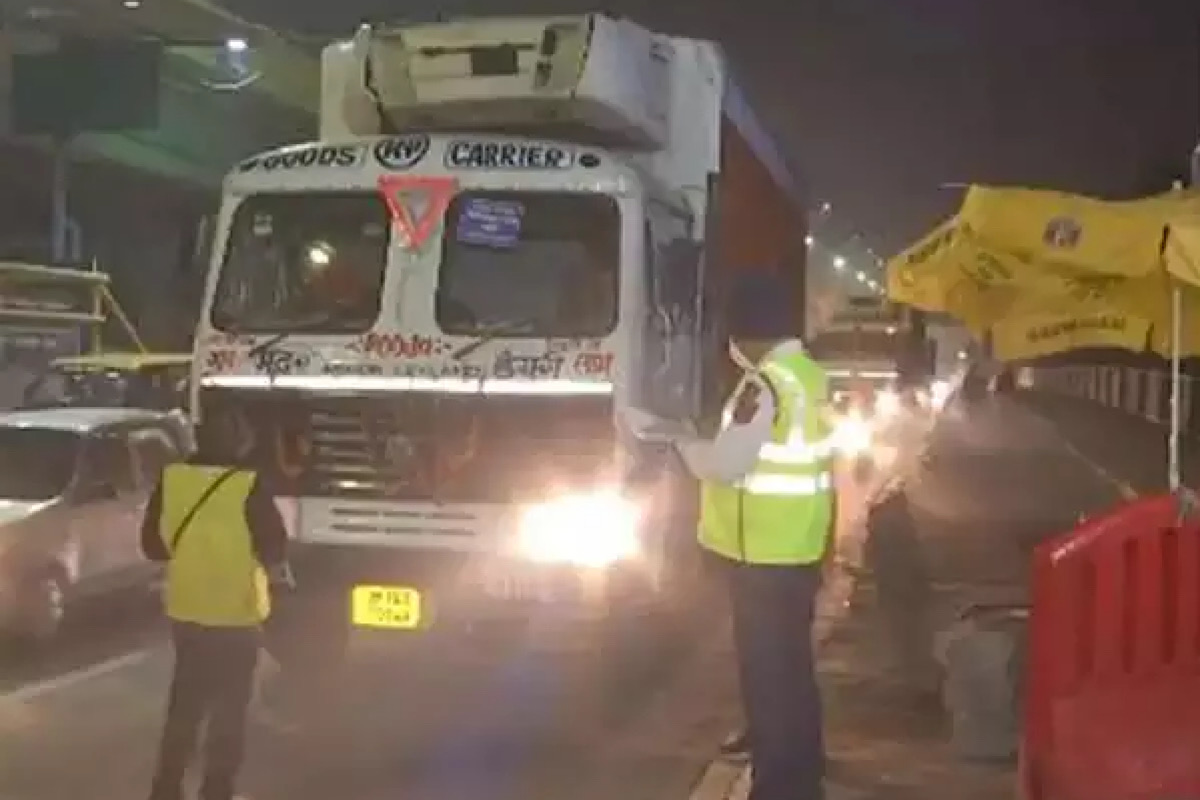
Truck entry restrictions & night-only movement
- Even when GRAP-IV wasn’t active, truck entry timing norms meant:
- No heavy commercial vehicles allowed during daytime peak hours inside Delhi.
- Entry after 11 pm on many outer stretches like NH-19, NH-44 and Ring Road sections.
Rerouting via KMP/EPE
- During full GRAP-IV bans, trucks carrying non-essential construction material had to:
- Stop before Delhi borders (like Ghaziabad, Kundli, Faridabad), or
- Use KMP Expressway (EPE/KMP) as a bypass for non-Delhi deliveries.
Takeaway for construction logistics in Delhi:
- Construction suppliers in Delhi cannot plan 12-month uniform operations anymore.
- From October to February, they must:
- Maintain a live watch on CAQM / Transport Dept orders.
- Assume that C&D + diesel truck movements can be stopped overnight.
- Keep a backup of Delhi-based CNG/BS-VI vehicles for essential, permitted works only.
5. Case study 3 – Regional FMCG fleet using Delhi as a transit hub
Profile:
A regional FMCG distributor based in Sonipat, supplying:
- North Delhi: Rohini, Pitampura, Shalimar Bagh
- Central Delhi: Karol Bagh, Chandni Chowk, Connaught Place
- South-West Delhi: Dwarka, Janakpuri
Historically, they sent BS-IV diesel trucks through:
- Singhu border → Mukarba Chowk → Ring Road, and
- Kundli → Outer Ring Road → Azadpur Mandi / Lawrence Road warehouses
What changed with GRAP-II & the 2025 BS-VI rule
GRAP-II entry curbs for BS-III & BS-IV commercial vehicles
-
Instructions to strictly enforce entry restrictions for
BS-III petrol & BS-IV diesel commercial vehicles
registered outside Delhi started coming into force from winter seasons.
- Enforcement teams at Tikri, Rajokri, Kalindi Kunj, Singhu, Ghazipur began checking
vehicle BS norms and registration states more aggressively.
2025: Only BS-VI, CNG or EV trucks from outside Delhi
- From Nov 1, 2025, only BS-VI / CNG / EV commercial vehicles from outside Delhi can enter.
- The distributor had to:
- Convert main line-haul trucks to BS-VI, and
- Use Delhi-registered CNG/EV vehicles for last-mile inside DL01–DL12 zones.
Rerouting & transshipment
- The company set up a transshipment hub near Kundli/KMP, offloading FMCG consignments there.
- Smaller BS-VI/CNG trucks registered in Delhi then carried goods to
Rohini, Dwarka, Karol Bagh and New Delhi markets.
Takeaway:
- Out-of-Delhi fleets can no longer treat Delhi as a casual pass-through city.
- To remain “Delhi-ready” you need:
- BS-VI, CNG or electric fleets for Delhi-bound loads,
- Peripheral hubs around KMP/EPE for transshipment, and
- Strong coordination with Delhi-based transport partners.
6. Key GRAP rules that Delhi transport & logistics must track
Here’s a simplified breakdown of the most critical GRAP-related rules for Delhi transport (2023–2025):
6.1 BS norm & fuel-type restrictions
- BS-III petrol & BS-IV diesel four-wheelers:
- Frequently banned under GRAP-III when AQI is Severe.
- Violations can attract heavy fines and seizure.
- Non-BS-VI commercial vehicles from outside Delhi:
- Prohibited from entering Delhi from Nov 1, 2025,
except specific exempt categories (essential services etc.).
- LNG/CNG/electric/BS-VI trucks:
- Typically allowed even under stricter GRAP rules, especially when carrying essential goods.
6.2 Truck entry & night-only movement rules
- Normal scenario (non-GRAP emergency):
- Heavy trucks are usually allowed only at night (post 11 pm)
at many Delhi entry points to reduce congestion and pollution.
- During GRAP-IV (Severe+):
- No entry for truck traffic into Delhi, except trucks with essential commodities
or services and specified clean-fuel / BS-VI trucks.
The business implications of these rules are not just theoretical –
Logistics Outlook has documented how GRAP-IV restrictions in Delhi-NCR particularly hurt small logistics firms operating non-BS-VI fleets, forcing them to rework routes, contracts and fleet-upgrade plans.
6.3 PUCC & challan enforcement
- PUCC (Pollution Under Control Certificate) is mandatory for all vehicles in Delhi.
GRAP mainly increases checking and challan frequency, especially at
borders, toll plazas and major intersections.
- Missing PUCC during GRAP can lead to:
- On-the-spot challans, and
- Possible impact on RTO services (e.g., fitness renewal, permit renewal) if challans pile up.
How Fateh Legacy helps Delhi transporters with GRAP compliance
GRAP rules do not just impact daily trips – they also connect with RTO paperwork, permits and fitness.
Many transporters in Delhi-NCR struggle with pending challans, outdated vehicle records, permit lapses
and confusion about which vehicles can legally enter Delhi during GRAP.
Fateh Legacy works as a specialised Delhi RTO & documentation partner for fleet owners,
logistics companies and transporters.
- Assistance with ownership updates, address change and hypothecation removal so that
vehicle records are clean before GRAP season.
- Support in sorting challans, PUCC status issues and RC corrections that can block permits or fitness renewals.
- Guidance on permit categories, fitness timelines and basic compliance for vehicles operating inside
DL01–DL12 zones.
Need help staying GRAP-compliant in Delhi?
Fateh Legacy helps Delhi transporters, fleet owners and logistics companies align their RTO documents,
permits and vehicle records with GRAP-season requirements so that goods keep moving smoothly.
Talk to our Delhi Transport RTO Expert
Conclusion
The period from 2023 to 2025 has completely reshaped how transport and logistics operate in Delhi,
especially during the high-pollution months from October to February.
With stricter GRAP rules, frequent BS-III/BS-IV bans, night-only truck movement,
and the “BS-VI, CNG, EV only” entry rule for outside commercial vehicles, transporters can no longer rely
on old operating patterns.
Delhi-based logistics hubs – from Okhla and Mundka to Azadpur, Dwarka, Karol Bagh and Ghazipur –
must now plan around real-time GRAP updates, maintain clean-fuel fleets, and optimise
routing, timing and compliance.
For fleet owners, drivers and businesses delivering in Delhi, the message is clear:
staying GRAP-compliant is not optional anymore – it is the only way to keep goods moving smoothly
through Delhi’s DL01–DL12 RTO zones during winter.
Staying compliant not only keeps your vehicles safe and legal on Delhi roads, but also protects you
from sudden operational shocks whenever AQI worsens and GRAP gets activated.
Frequently Asked Questions
What is GRAP and why does it affect transport in Delhi?
GRAP (Graded Response Action Plan) is a stage-wise emergency plan to control air pollution in Delhi-NCR. At higher stages like GRAP-III and GRAP-IV, strict rules are imposed on vehicle entry, truck movement, BS-III/BS-IV vehicles and diesel fleets, so transport and logistics are directly affected.
Which vehicles are most affected by GRAP rules between 2023 and 2025?
Older BS-III and BS-IV diesel vehicles, especially commercial goods vehicles and four-wheelers registered outside Delhi, are the most affected. From 1 November 2025, only BS-VI, CNG or EV commercial vehicles from outside Delhi can enter the city.
Are BS-III and BS-IV diesel trucks completely banned from Delhi?
BS-III and BS-IV vehicles are not permanently banned in all situations, but they often face temporary bans during GRAP-III and GRAP-IV when AQI is Severe or Severe+. In addition, non-BS-VI commercial vehicles from outside Delhi cannot enter from 1 November 2025, except in limited essential categories.
How can fleet owners plan routes during GRAP season?
Fleet owners should plan to use clean-fuel vehicles (CNG, EV, BS-VI) for trips entering Delhi, and schedule heavy truck movement during night windows (after 11 pm) where allowed. For non-Delhi deliveries, use KMP/EPE to bypass the city and avoid GRAP restrictions.
What role do KMP and EPE play during GRAP truck restrictions?
The Kundli–Manesar–Palwal (KMP) Expressway and Eastern Peripheral Expressway (EPE) allow long-haul trucks to bypass Delhi completely. During GRAP-IV or strict truck bans, fleets can offload at hubs along KMP/EPE and move goods into Delhi later using Delhi-registered BS-VI, CNG or EV vehicles.
What documents should drivers carry during GRAP season in Delhi?
Every vehicle should have a valid PUCC, up-to-date RC, insurance, permit and the driver’s DL. Keeping digital copies on DigiLocker or mParivahan is helpful. Clean documentation reduces the chance of delays and penalties at borders and check-points.
How often does GRAP get activated in Delhi?
GRAP stages are usually considered during the high-pollution months from October to February. Whenever AQI moves into Very Poor, Severe or Severe+ categories, CAQM may activate stronger GRAP stages, which then trigger stricter transport and truck rules.
Can my business still use Delhi as a transit hub under GRAP rules?
Yes, but only if your fleet is planned accordingly. You may need BS-VI, CNG or EV vehicles for Delhi entry, peripheral transshipment hubs around KMP/EPE, and coordination with Delhi-based partners for last-mile movement inside DL01–DL12 zones.
I run a small transport business. How can I afford to shift to BS-VI/CNG/EV?
You don’t need to upgrade everything overnight. Start by identifying the vehicles that enter Delhi most frequently and replace or lease those as BS-VI/CNG/EV first. For occasional Delhi loads, you can also work with Delhi-based partners for last-mile while your older trucks focus on non-Delhi routes.
How can Fateh Legacy help my transport business with GRAP compliance?
Fateh Legacy assists with RC corrections, address and ownership updates, permit and fitness renewals, challan guidance and documentation clarity for vehicles operating in Delhi. Clean, updated records make it easier for your fleet to stay GRAP-ready and avoid RTO-related issues during the pollution season.