Introduction
The Graded Response Action Plan (GRAP) has a direct impact on how people travel across Delhi–NCR. As pollution stages rise, restrictions are tightened across Delhi, New Delhi, Dwarka, Rohini, Saket, Mayur Vihar, Shahdara, Karol Bagh and all DL01–DL12 zones, affecting anyone commuting daily for work or school.
This guide breaks down how GRAP influences traffic rules, road movement, PUCC checks, old-vehicle restrictions, and the overall commute experience in 2025—along with smart, practical tips to help you avoid challans, delays and sudden route disruptions.
1. Why GRAP matters for Delhi commuters
GRAP is enforced by the Commission for Air Quality Management (CAQM) when Delhi's
AQI (Air Quality Index) reaches Poor, Very Poor, Severe or Severe+ levels.
During these phases, the Delhi Traffic Police and Transport Department increase:
- Roadside PUCC enforcement drives
- Checks on old diesel and petrol vehicles
- Deployment of additional traffic units in pollution hotspots like
Anand Vihar, Wazirpur, Okhla, Mundka, Jahangirpuri
- Restrictions on commercial transport and heavy vehicles
- Controls on construction-related vehicle movement
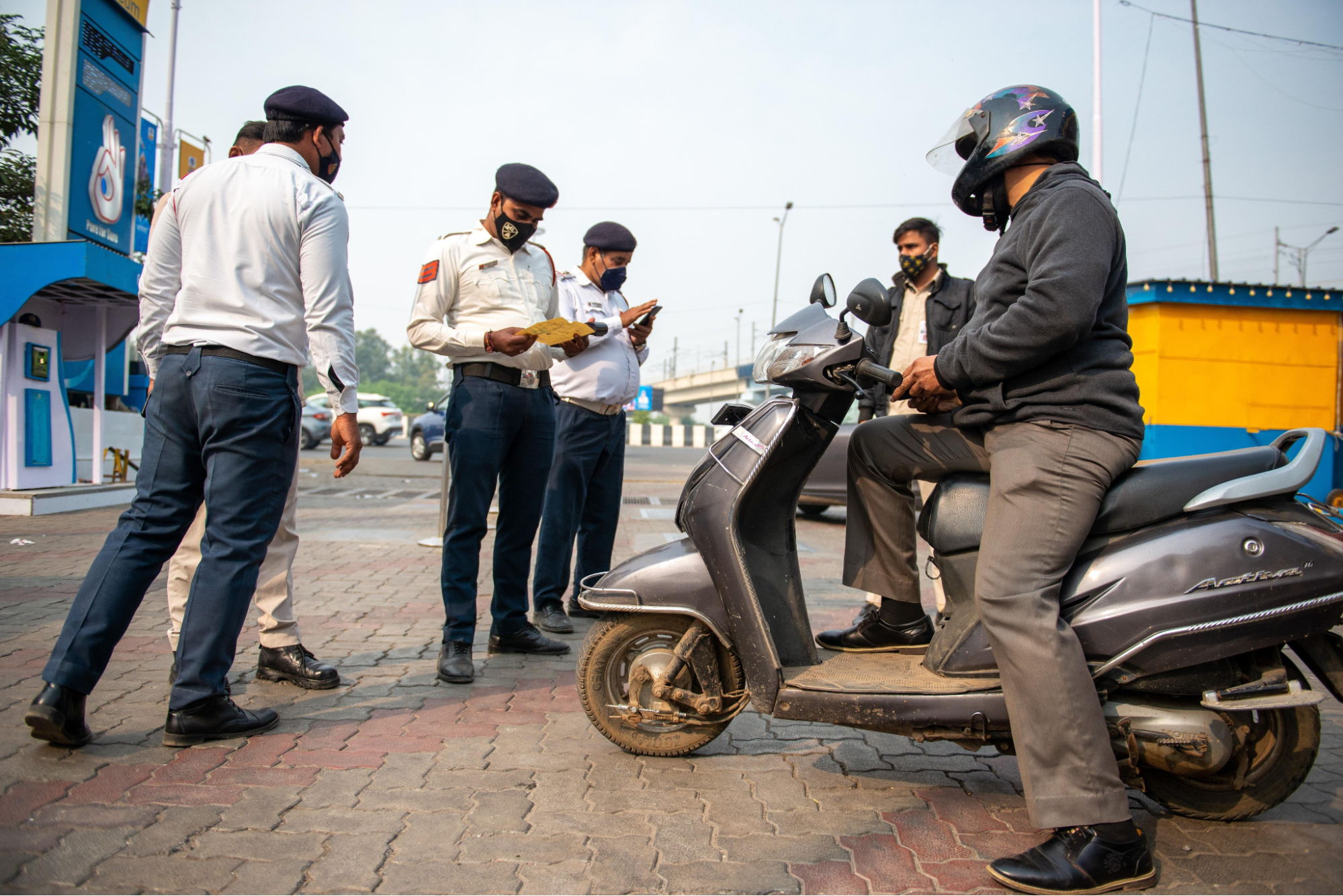
All these measures significantly change how people travel daily across Delhi, especially for
office-goers and regular border commuters.
2. PUCC: The most critical requirement for Delhi commuters during GRAP
During GRAP, PUCC (Pollution Under Control Certificate) becomes the number one document
checked by enforcement teams.
Delhi PUCC rules for commuters (2025)
- Every vehicle registered in Delhi, Noida, Gurugram, Faridabad, Ghaziabad and entering Delhi
must carry a valid PUCC.
- Traffic Police sets up special checkpoints at major routes such as:
- AIIMS Ring Road
- Ashram–DND stretch
- Rajouri Garden–Punjabi Bagh
- Loni Border
- NH48 Gurugram–Delhi border
- Fine for no PUCC: ₹10,000 + possible vehicle impoundment (under the Motor Vehicles Act).
Smart tip: Always check your PUCC validity on the official Parivahan portal or mParivahan app before commuting, especially during peak GRAP days. Recent Delhi Traffic Police data shows how aggressively PUCC violations are challaned during the GRAP season.
3. Restrictions on old petrol & diesel vehicles during GRAP
Delhi has some of the strictest age-related vehicle rules in India. These rules become even more
strictly enforced during GRAP Stage 3 and Stage 4.
For Delhi residents (DL01–DL12)
- Diesel vehicles older than 10 years – completely banned from Delhi roads.
- Petrol vehicles older than 15 years – permanently banned.
- During GRAP Stage 3 & Stage 4, enforcement teams actively tow and seize old vehicles.
Areas where old-vehicle checking is very active include:
- I.P. Estate
- Civil Lines
- Connaught Place
- Narela
- Dwarka Sector 21
- Saket–Mehrauli belt
If caught, the vehicle may be seized and sent towards scrapping/NOC cancellation. For commuters,
this means sudden loss of vehicle and heavy paperwork trouble.
In addition, new enforcement measures mean that such vehicles may not even be able to refuel in the city; a recent Economic Times report explains how fuel pumps use ANPR cameras to block 10-year diesel and 15-year petrol vehicles from getting fuel in Delhi.
4. Traffic rules & restrictions that affect daily commuters in Delhi
GRAP introduces a combination of traffic checks, diversions and parking rules that often lead to
delays and longer travel time for commuters.
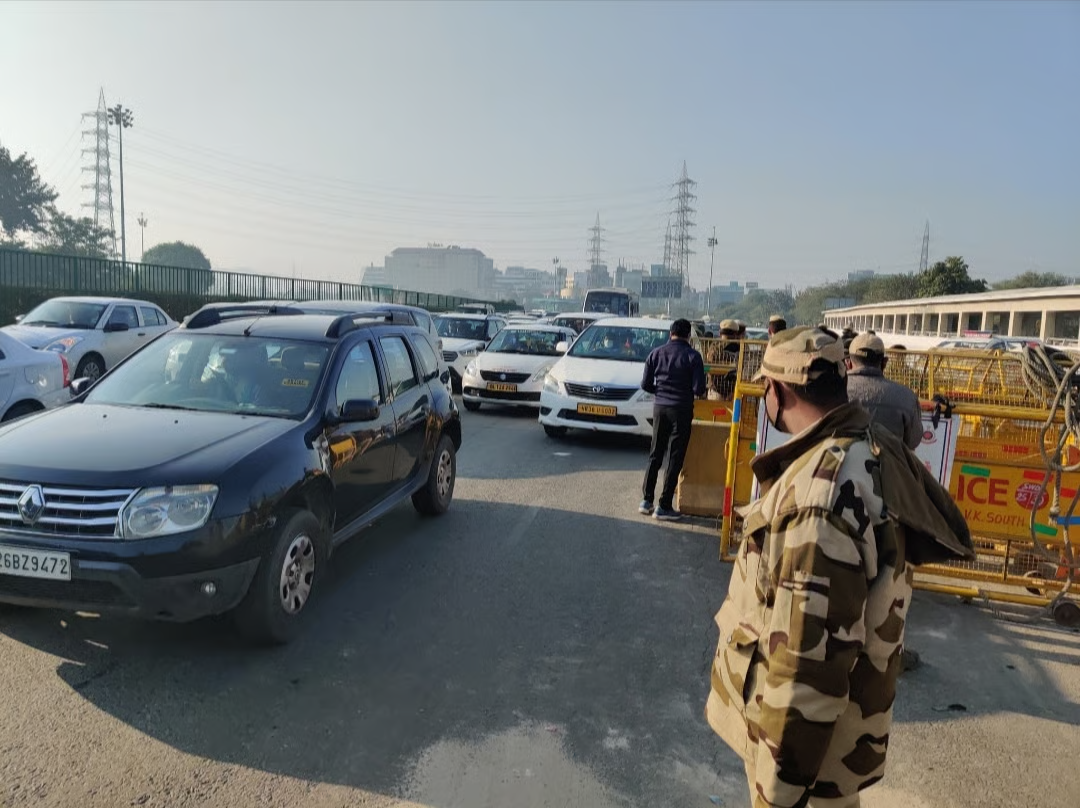
a) Slowdowns due to increased checking
- Heavy checking at Delhi–UP and Delhi–Haryana borders.
- Long queues at Sarai Kale Khan, Tikri Border, Badarpur Border and other busy entry points.
b) Commercial vehicle restrictions
Entry restrictions for many diesel trucks and commercial vehicles towards:
- Anand Vihar
- NH24 Akshardham stretch
- Rohini Sector 18–22
Recent policies like the ban on non-Delhi BS-III goods vehicles and entry curbs that,show how directly GRAP-linked rules hit freight movement and last-mile logistics into Delhi.
c) Construction vehicle ban
During Stage 3 & Stage 4:
- C&D waste transport vehicles face strict movement restrictions.
- This directly affects construction-heavy areas like
Punjabi Bagh, Najafgarh, Okhla, Wazirpur Industrial Area.
d) Parking restrictions
Delhi's commercial hotspots see strict no-parking enforcement to reduce congestion and emissions:
- Karol Bagh
- Lajpat Nagar
- Hauz Khas
- Rajouri Garden
Commuters must plan for extra time, legal parking options and sometimes a last-mile walk or metro hop.
5. Best alternate routes for Delhi commuters during GRAP
Delhi commuters can reduce travel time and avoid heavy-checking corridors by shifting to
low-restriction, lower AQI routes wherever possible.
Smart alternate routes (examples)
- Dwarka → Gurugram: Use NH248BB (Dwarka Expressway) instead of NH48.
- East Delhi → Central Delhi: Use Patparganj → ITO via Vikas Marg instead of NH24–Akshardham.
- Noida → South Delhi: Prefer Kalindi Kunj Road when conditions allow, instead of DND Flyway during peak checks.
- Rohini → Connaught Place: Take Outer Ring Road → Dhaula Kuan instead of Azadpur–Model Town.
- Faridabad → Delhi: Prefer Mathura Road → Jangpura rather than Badarpur Toll during intense GRAP checks.
For many commuters, the Delhi Metro remains the fastest and most reliable option during severe GRAP enforcement.
7. How GRAP impacts office-goers in Delhi
Daily office commuters from Dwarka, Rohini, Janakpuri, Uttam Nagar, Laxmi Nagar, Preet Vihar, South Extension,
Green Park, Malviya Nagar, Noida Sector 62, Gurugram Cyber City and other hubs typically face:
- Longer border wait times due to combined PUCC and vehicle-age checking.
- Heavy checking near commercial hubs like Connaught Place (CP), Nehru Place, Saket, Aerocity.
- Increased metro crowding during peak GRAP days.
- Stricter parking enforcement in and around business districts.
Many companies in Delhi-NCR respond to Severe or Severe+ days by:
- Adopting work-from-home (WFH) mode for certain teams.
- Offering flexible reporting times to avoid peak enforcement hours.
- Running shuttle services from nearby metro stations.
How Fateh Legacy helps Delhi commuters during GRAP
For many commuters, GRAP is not just about air quality alerts – it is about keeping vehicles legally compliant
so that daily travel is not interrupted by fines, towing or paperwork issues. This is where Fateh Legacy
supports Delhi vehicle owners and professionals.
With Fateh Legacy, you can:
- Regularly update PUCC, RC and address details to avoid surprises at checkpoints.
- Get assistance for ownership transfer, NOC, hypothecation removal and duplicate RC across
DL01–DL12.
- Understand age-related bans and plan scrapping or NOC-out for old vehicles in time.
- Receive clear GRAP-season checklists so your car or bike stays compliant before winter starts.
Need help staying GRAP-compliant in Delhi?
Fateh Legacy guides Delhi commuters with PUCC, RC updates, NOC, hypothecation removal, scrapping and
other RTO services so you can travel across Delhi–NCR without worrying about sudden challans or vehicle seizure.
Talk to our Delhi RTO Expert
Conclusion
GRAP is now a fixed part of Delhi's winter routine. For daily commuters, it brings stricter
traffic checks, PUCC enforcement, old-vehicle bans, diversions and peak-hour delays across major routes like
Delhi–Noida, Delhi–Gurugram and Delhi–Faridabad.
Staying PUCC-compliant, planning smarter routes, using the Metro wherever possible and
keeping track of CAQM/Delhi Traffic Police updates can help Delhi residents travel smoothly even during
Severe and Severe+ pollution days.
With the right precautions and timely RTO updates, commuting across DL01–DL12 during the GRAP season becomes
safer, faster and hassle-free. Staying compliant not only keeps your vehicle safe on Delhi roads but also protects
you from sudden restrictions and unexpected challans whenever AQI worsens.
Frequently Asked Questions
What is GRAP and why does it affect Delhi commuters?
GRAP (Graded Response Action Plan) is a set of pollution-control measures enforced by CAQM when Delhi's AQI reaches Poor, Very Poor, Severe or Severe+ levels. It affects commuters by increasing PUCC checks, old-vehicle enforcement, border checking and restrictions on certain vehicle categories.
Do I need a valid PUCC to drive into Delhi during GRAP?
Yes. A valid PUCC is mandatory for all vehicles entering and driving inside Delhi, especially during GRAP. If you are stopped without a valid PUCC, you can face fines up to ₹10,000 and possible vehicle impoundment.
Can I use my 12-year-old diesel car for commuting in Delhi?
No. In Delhi, diesel vehicles older than 10 years are banned from the road. Such vehicles can be seized during GRAP enforcement and may need to be scrapped or moved out of Delhi via NOC.
Which areas in Delhi see the strictest GRAP checking for commuters?
Strict checking usually happens at Delhi–UP and Delhi–Haryana borders and at pollution hotspots like Anand Vihar, Wazirpur, Okhla, Mundka, Jahangirpuri, Sarai Kale Khan, Badarpur Border and Tikri Border.
Is Delhi Metro a better option during GRAP?
Yes. The Delhi Metro is often the fastest way to commute during GRAP. Lines like the Yellow, Blue and Magenta help commuters bypass border checks, traffic jams and parking hassles.
How can I reduce delays while commuting during GRAP?
Keep your PUCC and RC updated, avoid high-AQI corridors, use alternate routes, plan metro or carpooling for peak days and regularly check Delhi Traffic Police updates before starting your journey.
What happens if my vehicle is too old as per Delhi rules?
If your vehicle crosses the 10-year diesel or 15-year petrol limit in Delhi, it may be marked as end-of-life and not allowed on city roads. During GRAP, such vehicles are more likely to be seized, and you may have to opt for scrapping or NOC-out.
Can Fateh Legacy help me with GRAP-related RTO issues?
Yes. Fateh Legacy can help you with PUCC awareness, RC corrections, NOC, hypothecation removal, scrapping documentation and ownership transfer so that your vehicle remains compliant and your daily commute stays smooth.
How often should I check my PUCC and AQI during winter?
During winter and GRAP season, check your PUCC validity at least once a month and keep an eye on AQI and GRAP stage updates daily through official apps and Delhi government notifications.
Does GRAP apply only to Delhi residents or also to Noida/Gurugram commuters?
GRAP rules are enforced across Delhi and Delhi borders. Even if your vehicle is registered in Noida, Gurugram, Faridabad or Ghaziabad, you must follow GRAP-related requirements such as PUCC compliance and age rules while entering or driving in Delhi.