Introduction
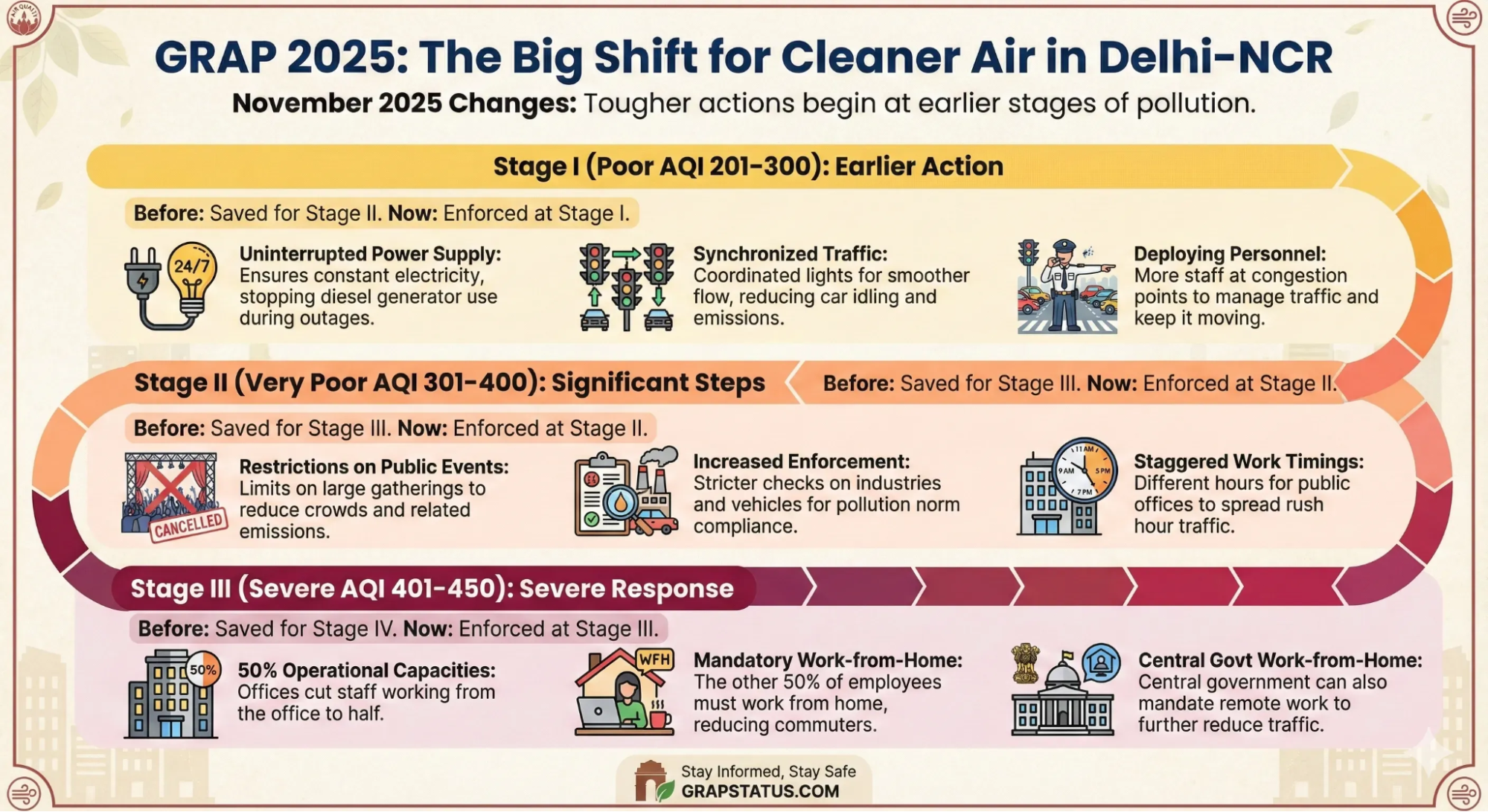
The Graded Response Action Plan (GRAP) is the central pollution-control framework that regulates
vehicle movement across Delhi, New Delhi, Dwarka, Rohini, Saket, Shahdara, Karol Bagh, Mayur Vihar
and all DL01–DL12 RTO zones. As pollution levels rise from “Poor” to “Severe+”, GRAP imposes
different levels of restrictions on public transport, private vehicles, commercial fleets, diesel LMVs
and older vehicles. These rules are designed to reduce emissions but also significantly change how people travel
in Delhi during the high-pollution phase.
This guide breaks down:
- How GRAP classifies and regulates public vs private vehicles in 2025
- Which categories are allowed, partially restricted or completely banned at different GRAP stages
- How diesel cars, LMVs, trucks and over-age vehicles are screened at Delhi borders
- Best commuting strategies for office workers, school commuters and business operators
- A complete compliance checklist to avoid challans, delays and route disruptions
Whether you travel daily by private car, cab, metro, bike, auto or commercial vehicle, knowing these
GRAP rules ensures smoother, compliant travel and helps you stay prepared for sudden pollution-related restrictions.
1. Public vs Private Vehicles: GRAP Delhi Restrictions at a Glance (2025)
Here is a quick side-by-side comparison of how public, private and commercial vehicles are treated under GRAP in Delhi:
| Vehicle Type |
Status Under GRAP (2025) |
Allowed / Restricted Areas |
Notes |
| Delhi Public Buses (DTC/Cluster) |
✔ Allowed |
Entire Delhi NCR |
Public transport is encouraged to reduce private vehicle use. |
| Delhi Metro |
✔ Allowed |
All corridors |
No restrictions; ridership usually increases during GRAP. |
| Electric Vehicles (EV) |
✔ Allowed |
All Delhi areas |
Zero-emission vehicles face no GRAP restrictions. |
| CNG Taxis, Autos & Ride-Sharing EVs |
✔ Allowed |
Across Delhi NCR |
CNG autos & taxis get exemptions from diesel restrictions. |
| Private Petrol/CNG Cars |
✔ Allowed in most stages |
All Delhi zones |
Restrictions mainly during Severe+ stages in some cases. |
| Old Diesel Vehicles (> 10 years) |
Banned entire year |
Entire Delhi |
Permanent ban – strict enforcement during GRAP. |
| Old Petrol Vehicles (> 15 years) |
Banned |
Entire Delhi |
Permanent ban with challans & impound during GRAP. |
| Heavy Diesel Trucks (Outside Delhi) |
Stopped entry during Stage 3 & 4 |
Delhi borders |
Except vehicles carrying essential goods. |
| Diesel LMVs (Commercial) |
Restricted in Stage 3–4 |
Delhi borders |
BS-VI category gets limited exemption. |
This table helps you quickly see which vehicles are safe to use and which face seasonal or permanent restrictions
under GRAP in Delhi. Recent GRAP-4 orders have, for instance, stopped most truck traffic and outside LCVs from entering Delhi during severe pollution spells, directly affecting transport and logistics planning.
2. Public Transport Exemptions in Delhi During GRAP
Public transport in Delhi receives maximum exemptions because the primary goal of GRAP is to
discourage private vehicle usage and reduce emissions.
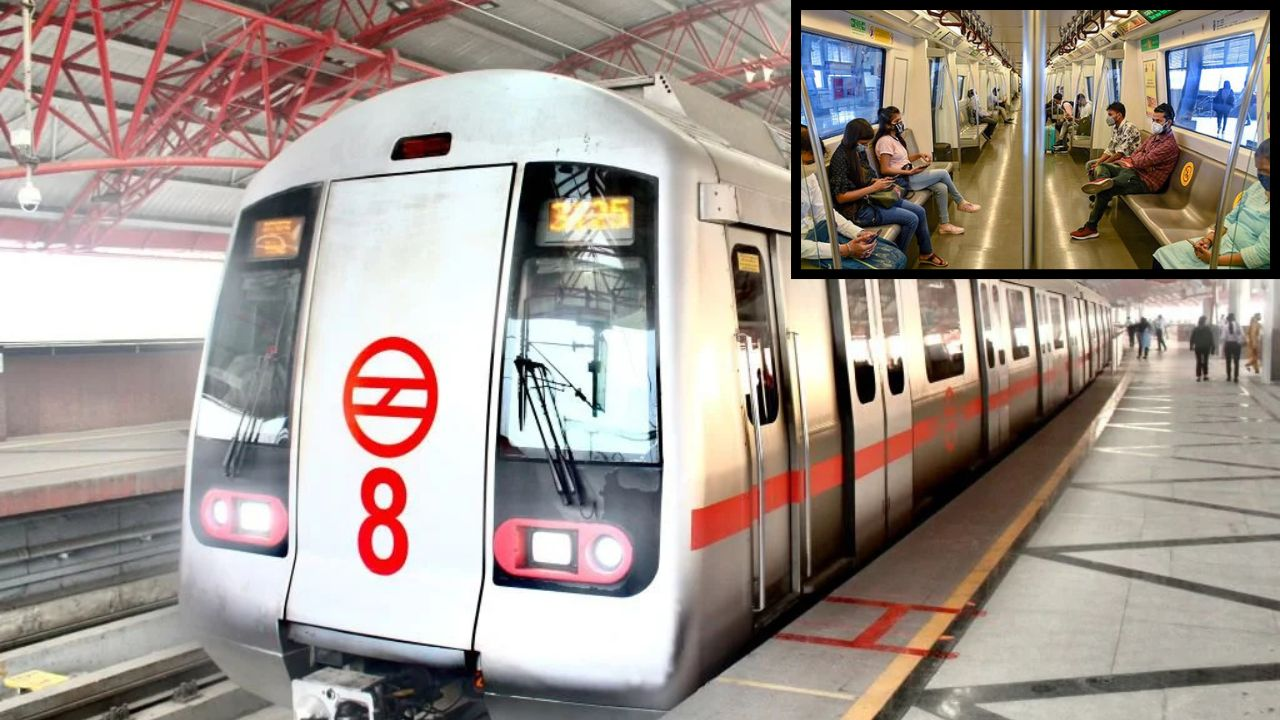
✔ Delhi Metro – Fully Exempt
The Delhi Metro runs normally across Red, Blue, Yellow, Magenta, Pink, Violet and Green Lines.
During high pollution days:
- Train frequency is often increased
- Extra coaches may be added on busy routes
- Commuters from Dwarka, Rohini, Noida, Ghaziabad, Faridabad and Gurugram rely heavily on metro connectivity
✔ DTC & Cluster Buses – Fully Allowed
DTC and Cluster buses connecting Dwarka, Uttam Nagar, Rajouri Garden, Najafgarh, Lajpat Nagar,
Karol Bagh, Azadpur and Connaught Place continue to operate without GRAP-specific restrictions.
More buses may be deployed to accommodate passengers shifting from cars to public transport.
✔ CNG Autos & Taxis – Exempt
CNG-run autos and yellow-plate taxis can operate freely in:
- Seemapuri, Janakpuri, Vasant Vihar, Okhla
- Loni Road Border, GTB Nagar, Azadpur
- Other major ring road and outer ring road corridors
✔ Emergency, School & Govt Transport
The following categories generally remain exempt under GRAP (subject to valid permits and documents):
- Ambulances
- Fire brigade vehicles
- School buses with valid permits
- Government field-duty vehicles
- Airport and Railway shuttle buses
These exemptions ensure that essential services and daily commuting of Delhi’s residents can continue
even during Severe and Severe+ pollution episodes.
3. Private Vehicle Restrictions in Delhi Under GRAP (2025 Update)
Private vehicles face severe restrictions especially during Stage 3 (Severe) and
Stage 4 (Severe+) of GRAP.
A) Year-Round Bans (Applicable Across Delhi)
Regardless of GRAP stage, the following bans apply across Delhi throughout the year:
- Diesel vehicles older than 10 years
- Petrol vehicles older than 15 years
These rules are enforced strictly at:
Saket, Civil Lines, Ashram, Punjabi Bagh, Najafgarh, Rithala, Mayur Vihar, Rohini Sector-3, Hauz Khas, Connaught Place
and other busy junctions.
B) Stage-Wise Restrictions
GRAP Stage 1 (Poor)
- No major restrictions for private cars
- Mandatory to carry a valid PUCC (Pollution Under Control Certificate)
- Advisory to avoid unnecessary travel in peak hours at
Anand Vihar, Wazirpur, Jahangirpuri – Delhi’s pollution hotspots
GRAP Stage 2 (Very Poor)
- Stricter enforcement of PUCC checks
- Special drives on NH-24, Mathura Road, Ring Road and Outer Ring Road
- Advisories to limit long idling and non-essential private car use
GRAP Stage 3 (Severe)
- Private Diesel Light Motor Vehicles (LMVs) face restrictions from entering Delhi
- Exemptions usually apply if:
- They are BS-VI compliant, or
- Used for essential services (medical, food supply, emergency work)
In late 2023, for example, Stage-3 curbs reported by NDTV included bans on BS-III petrol and BS-IV diesel four-wheelers in Delhi-NCR and non-essential construction, illustrating how quickly private car usage can be restricted when air quality turns severe.
GRAP Stage 4 (Severe+)
When Delhi’s AQI crosses the 450+ mark, the strictest rules come into force:
- All diesel LMVs (non-essential) are banned from entering Delhi, except BS-VI in limited cases
- Construction activities are suspended, affecting material-carrying trucks
- Diesel commercial vehicles are barred at Delhi borders:
Singhu, Tikri, Badarpur, Ghazipur, Anand Vihar
- Private petrol and CNG cars may still move, but the government strongly discourages their use
As a private vehicle owner in Delhi, you should always track the current GRAP stage before planning long-distance
or border-crossing trips.
4. Best Commuting Practices for Delhi Residents During GRAP
Here are practical steps for daily commuters from Dwarka → Gurugram, Rohini → Noida, Laxmi Nagar → CP, Janakpuri → Karol Bagh and other routes:
1. Shift to Metro + Last-Mile Options
Use a combination of:
- Metro for long-distance travel
- E-rickshaws, CNG autos or shared EV cabs for last mile
This helps you avoid border restrictions, diesel bans and long traffic jams.
2. Keep Your PUCC Updated
Always carry a valid PUC certificate when driving in:
- RK Puram, ITO, Dhaula Kuan
- Nehru Place, Vasant Kunj, Rajouri Garden
- Other high-traffic and industrial corridors
3. Avoid Using Diesel Vehicles
If you still use a personal or commercial diesel vehicle, try to limit travel especially near:
- Delhi–Gurugram border
- Ghaziabad border
- Tikri border
- Singhu border
4. Use EVs or CNG Vehicles Where Possible
EV scooters, EV cars and CNG autos are not directly affected by GRAP restrictions. Switching to these
options not only keeps you compliant but also reduces your running costs and emission footprint.
5. Follow Real-Time CAQM & DPCC Updates
Check live updates on:
- CAQM website
- Delhi Transport Department social channels
- Delhi Traffic Police traffic alerts
These will inform you when GRAP moves from Stage 2 → 3 → 4, so you can adjust your travel plans accordingly. Detailed summaries in mainstream media, such as this Indian Express explainer on GRAP-4 restrictions, also help commuters understand exactly which buses, trucks and LCVs are allowed on the road on any given day.
5. How Commercial Diesel Vehicles Get Affected
Commercial operators in Okhla Industrial Area, Naraina, Mayapuri, Bawana, Narela, Badli and other hubs face
some of the strictest GRAP rules.
Key impacts:
- Diesel trucks (except those carrying essential goods) cannot enter Delhi in Stage 3–4
- BS-VI trucks may be allowed with specific exemptions and documentation
- Construction material transport (sand, aggregates, bricks, cement, tiles, etc.) is heavily restricted in Stage 4
This directly affects businesses supplying:
- Raw materials for construction
- Heavy machinery
- Building aggregates, tiles, iron and cement
Fleet owners and logistics managers must factor GRAP into their delivery schedules, route plans and vehicle choices
for the October–February season. Recent enforcement drives, including the 2025 ban on commercial goods vehicles below BS-IV norms entering Delhishow how quickly freight rates and delivery timelines can change for logistics operators in and around the capital.
6. How Delhiites Can Stay Compliant (Checklist)
Use this simple checklist to stay compliant with GRAP rules and avoid challans:
- Keep PUCC updated and carry a copy (physical or digital)
- Ensure your vehicle is not older than 10 years (diesel) or 15 years (petrol)
- Prefer metro, buses and EV/CNG autos for regular commuting
- Avoid using diesel vehicles during GRAP Stage 3 and 4
- Track CAQM and Delhi Traffic Police alerts for stage changes
- Avoid Delhi borders on days with Very Poor/Severe AQI if you drive diesel or commercial vehicles
- Maintain your engine and exhaust system to reduce smoke emissions
- Use navigation and pollution apps for real-time traffic and AQI data
Following this checklist helps you plan your travel better and prevents sudden interruptions in your daily routine
when pollution levels spike.
How Fateh Legacy helps with GRAP & Delhi RTO work
GRAP is not just about driving restrictions – it also affects how you manage your vehicle documents, NOC, RC status and scrapping.
Many Delhi vehicle owners discover issues such as:
- Old vehicles still active in records during 10/15-year bans
- Pending challans blocking RC transfer or NOC
- Mismatched addresses and hypothecation entries
This is where Fateh Legacy can support you as a trusted Delhi RTO partner.
- Get help with RC transfer, NOC, hypothecation removal and duplicate RC across all DL01–DL12 zones
- Clarify whether your vehicle is legally permitted to run during GRAP stages
- Understand when to scrap, sell or move your vehicle out of Delhi
Confused about GRAP rules and your vehicle status in Delhi?
Fateh Legacy helps Delhi vehicle owners check GRAP compliance, manage RC transfer, NOC, hypothecation removal,
duplicate RC and scrapping documentation so you stay tension-free throughout the winter pollution season.
Talk to our Delhi RTO Expert
Conclusion
GRAP in Delhi is designed to protect public health, and the biggest changes are seen in how
public vs private vehicles operate during the October–February pollution season.
Public transport (Metro, DTC, CNG autos) remains largely exempt, while
private diesel vehicles and old vehicles face strict restrictions, especially in Stage 3 & 4.
By shifting to cleaner options, planning routes smartly, and keeping your PUC & vehicle documents updated,
Delhi commuters can travel safely without penalties.
Staying compliant not only keeps your vehicle safe on Delhi roads but also protects you from sudden restrictions
whenever AQI worsens and GRAP stages change.
Frequently Asked Questions
Are private cars completely banned in Delhi during GRAP?
No. Private petrol and CNG cars are generally allowed in most GRAP stages, but strongly discouraged during Stage 3 & 4. Year-round bans mainly apply to old diesel (>10 years) and old petrol (>15 years) vehicles.
Can I drive my 11-year-old diesel car in Delhi during GRAP?
No. Diesel vehicles older than 10 years are banned in Delhi regardless of GRAP stage. Driving such a vehicle can lead to challans and impounding.
Do GRAP restrictions affect Delhi Metro and DTC buses?
Delhi Metro and DTC/Cluster buses are fully allowed during GRAP. In fact, the government encourages residents to use public transport to reduce emissions.
What happens to diesel trucks during GRAP Stage 3 and 4?
During Stage 3 & 4, most diesel trucks (except those carrying essential goods) are stopped at Delhi borders like Singhu, Tikri, Ghazipur and Badarpur and are not allowed to enter the city.
Are CNG autos and taxis allowed during GRAP?
Yes. CNG autos and taxis remain allowed across Delhi NCR even during higher GRAP stages, as they are considered lower-emission public transport options.
How can I check the current GRAP stage in Delhi?
You can check the current GRAP stage on the CAQM website, Delhi government portals and Delhi Traffic Police social media handles, which publish regular pollution and traffic advisories.
Do I still need a PUCC if my car is new?
Yes. A valid POLLUTION UNDER CONTROL (PUC) certificate is mandatory for all vehicles, including new cars. During GRAP, PUCC checks become more frequent at major junctions.
Are EVs affected by GRAP Delhi rules?
Electric vehicles (EVs) are not directly restricted by GRAP as they have zero tailpipe emissions. EVs are one of the safest options for daily commuting during pollution season.
Does GRAP apply only inside Delhi or also at the borders?
GRAP rules apply inside Delhi and are strictly enforced at borders where vehicle entry is controlled. Diesel trucks and commercial vehicles face the biggest restrictions at these points.
Can Fateh Legacy help if my vehicle is non-compliant under GRAP rules?
Yes. Fateh Legacy can guide you on whether to transfer, scrap or regularise your vehicle, and assist with related RC transfer, NOC, hypothecation removal and documentation so you stay legally compliant.